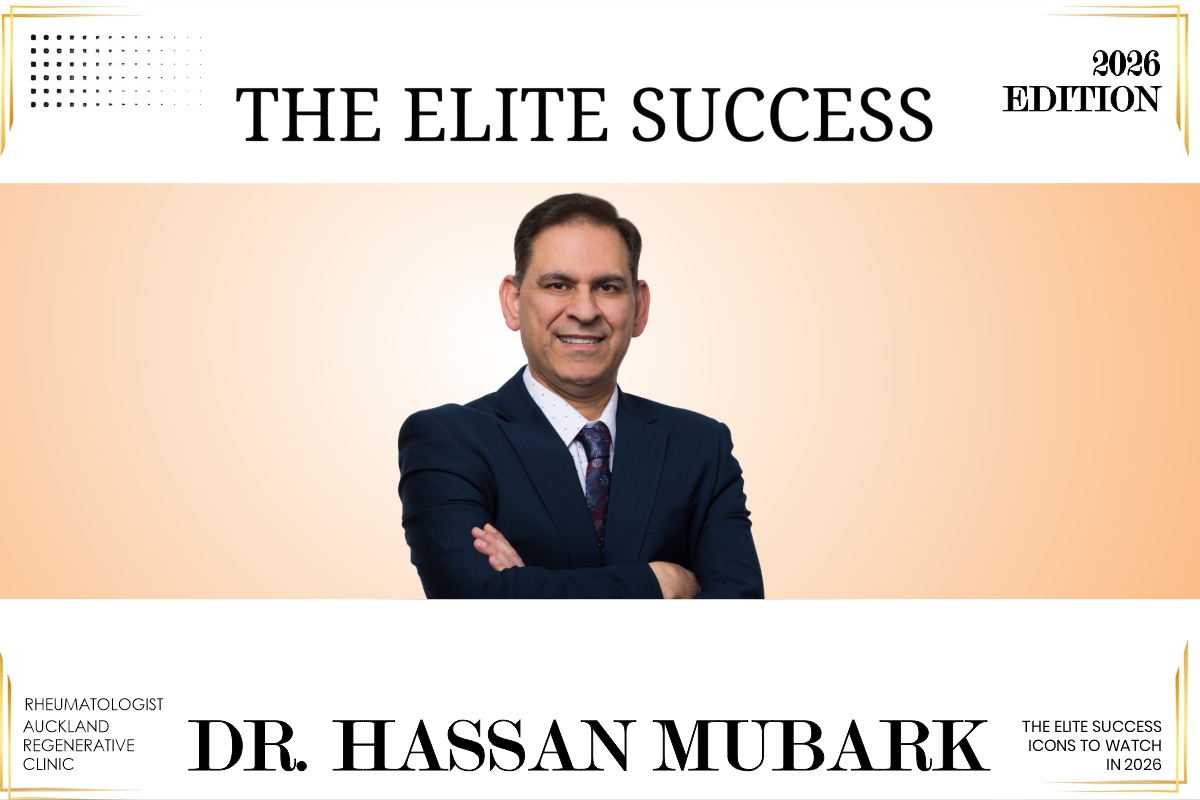
Rewriting the Rules of Healing: Inside Dr. Hassan Mubark’s Vision for Next-Gen Rheumatology
The world today grapples with the rise of bone, joint, and muscle problems, stressing the utmost importance of rheumatology and regenerative medicine. According to the reports of the World Health Organization, 1.71 billion people today live with musculoskeletal disorders. Among these, arthritis, tendon injuries, back problems have topped the charts along with few other conditions.
2021 alone saw 606.5 million cases of osteoarthritis, and the number has only been growing for the past three decades. Amid this, other joint and muscle related disorders are also on a surge. By 2050, these numbers are predicted to grow from 494 million cases in 2020 to 1.06 billion. The leading causes include ageing populations, sedentary lifestyles, increasing injuries and also an increase in obesity rates.
In times like these, regenerative medicine is becoming one of the fastest-growing areas in healthcare. In 2024 itself the regenerative medicine market was valued at USD 32.6 billion and is only seeing a steep growth as we move ahead. The most important why this market is poised to grow is because patients are now seeking repair and restore of the body than just reducing symptoms.
Because of these trends, rheumatology is changing. It is no longer only about managing pain. It is becoming a field focused on healing, regeneration, and long-term mobility. In this moment of rising need and rapid scientific progress, Dr. Hassan Mubark stands out as a leader. His work is helping shape the future of joint care for patients across APAC and beyond.
The Force Behind Dr. Mubark’s Regenerative Vision
Dr. Hassan Mubark often says that his journey into regenerative medicine began not in a laboratory, but in the clinic—watching patients undergo surgeries he believed could have been avoided. “I saw too many people progressing toward invasive procedures when orthobiologic interventions, if offered earlier, could have completely altered their treatment trajectory.” he reflects. This constant exposure to preventable suffering became one of his strongest motivators.
His thinking was deeply influenced by medical pioneers who dared to challenge conventional wisdom. He often cites Dr Barry Marshall, the pioneering physician-scientist who transformed the treatment of peptic ulcers by proving that the bacterium Helicobacter pylori—not stress or lifestyle—was the true cause, and that it could be effectively cured with a course of antibiotics and antacids. Marshall’s boldness, including his decision to ingest the bacteria himself to validate his hypothesis, left a profound and lasting influence on Dr Mubark. It taught him that progress often begins with questioning accepted norms.
Equally formative was the work of Nobel Laureate Professor Shinya Yamanaka, whose discovery of induced pluripotent stem cells transformed regenerative science and eliminated long-standing ethical barriers associated with embryonic stem cell use. Dr Mubark recognised in Yamanaka’s breakthrough a roadmap for how biology could evolve in entirely new and unprecedented ways.
Together, these influences strengthened his belief that innovation is not optional—it is essential. And today, this belief drives his commitment to pushing musculoskeletal care into a more regenerative, less invasive future.
Where Science Meets Compassion
For Dr. Hassan Mubark, identity in medicine has never been a single dimension. It is a blend of clinician, researcher, and advocate—shaped by years of challenging traditional approaches to musculoskeletal care. He explains that early in his career, he felt constrained by the conventional pathways that dominated treatment: immobilisation, long-term medications, or surgery. “I knew there had to be more—more options, more innovation, more possibilities for genuine recovery,” he often says.
His training in rheumatology grounded him deeply in chronic, complex diseases. It taught him to understand inflammation, pain, and long-term patient suffering at a microscopic and human level. But stepping into regenerative medicine changed the trajectory of his professional identity. It opened the door to orthobiologic therapies that offered not just symptom control, but the potential for real restoration.
Those who work with him say Dr. Mubark embodies a rare duality: he operates with the precision of a scientist and the empathy of a physician committed to human connection. He sees himself as a bridge between research and real-world healing—someone who uses innovation responsibly, pairing evidence with compassion.
This blend of rigor and humanity now defines his purpose. It guides his belief that medicine must evolve, and that patients deserve treatments rooted not only in science, but in hope.
How Values Elevated Dr. Mubark as a Trusted Leader in Regenerative Medicine
For Dr. Hassan Mubark, trust is not something a doctor claims—it is something a doctor earns. His work in rheumatology and regenerative medicine is guided by a core set of values he returns to every single day: integrity, compassion, scientific honesty, and respect for patient autonomy. “Every patient deserves the truth, even when the truth is uncomfortable,” he often says. This means acknowledging limitations, being clear about risks, and never promising what science cannot yet deliver.
These ethical foundations have become the bedrock of his reputation in Auckland’s emerging regenerative medicine landscape, a field still considered experimental by many. Colleagues describe him as someone who pairs innovation with responsibility, advancing new therapies without ever compromising patient safety. His approach is meticulous—rooted in documentation, evidence, and transparency. He publishes real case studies, imaging results, and long-term follow-ups, showcasing both successes and limitations. This honesty has made him a credible voice at a time when the field is often misunderstood or misrepresented.
Dr. Mubark believes that leadership in regenerative medicine requires humility, continuous learning, and unwavering ethical discipline. “Innovation means nothing if it doesn’t serve people ethically,” he explains. By prioritising informed consent, cultural sensitivity, and clear communication, he ensures patients feel empowered—not persuaded.
This fusion of personal values and professional discipline has helped establish him as a trusted authority in Auckland and the wider APAC region. Dr. Mubark’s credibility stems from the consistency between what he believes and how he practices: a commitment to science, a devotion to patient well-being, and a moral compass that never wavers. It is this alignment that defines his identity—and sets him apart as a leader in a rapidly evolving field.
Auckland Regenerative Clinic: Where Innovation and Healing Converge
Auckland Regenerative Clinic (ARC) was established with a clear purpose: to bring New Zealand world-class regenerative medicine grounded in science, ethics, and genuine healing. Dr. Hassan Mubark describes the vision simply: “We wanted to create a place where patients could access advanced regenerative treatments—not just more medication or another surgery.”
ARC specialises in expanded adipose-derived stem cells, bone marrow stem cells, platelet-rich plasma (PRP), and hyaluronic acid therapies. These treatments focus on using the body’s own biological tools to repair, regenerate, and restore function—an approach that aligns with global advancements in orthobiologics.
The clinic attracts patients from across New Zealand and internationally, many of whom arrive after exhausting traditional medical pathways. Dr. Mubark notes that many of these pathways often end in surgery, long recovery periods, and inconsistent outcomes. ARC exists to challenge that pattern.
Its core mission goes beyond reducing pain; it aims to reverse damage, preserve mobility, and rebuild quality of life. Every treatment is guided by precision diagnostics, scientific evidence, and strong ethical practice.
Colleagues say ARC’s strength lies in its blend of clinical excellence and transparency. Dr. Mubark’s leadership reinforces a culture where innovation is paired with integrity, ensuring that patients receive not only cutting-edge therapies but also honest, compassionate, and culturally sensitive care. For ARC, regeneration is not just a treatment philosophy—it’s a commitment to transforming how musculoskeletal health is managed in New Zealand.
Breaking Barriers
Bringing regenerative medicine to New Zealand was not a smooth path—it required persistence, education, and unwavering adherence to safety. Dr. Mubark recalls the early days vividly: “We were introducing therapies that many people had only heard about in theory. Misconceptions were everywhere.”
One of the biggest challenges was public confusion around stem cell therapies. Many associated them with embryonic stem cell debates, unaware that ARC exclusively uses ethically sourced, adult-derived cells from the patient’s own bod. At the same time, some clinicians hesitated to embrace new approaches without decades of outcome data, and regulatory frameworks were still evolving.
To earn trust, ARC prioritised complete transparency. Detailed informed-consent processes, thorough explanations, and honest conversations became standard. Every case was meticulously documented, often supported by imaging and long-term follow-up. Dr. Mubark also invested heavily in international training to ensure Auckland’s patients received care aligned with global best practices.
Engagement with the wider medical community was another essential step. Through conferences, research presentations, and peer dialogue, ARC began reshaping perceptions. As real patient outcomes emerged—improved mobility, reduced pain, delayed need for surgery—confidence grew. Published case studies further strengthened credibility.
Today, regenerative therapies in New Zealand are no longer viewed as fringe or experimental curiosities. Thanks to ARC’s evidence-driven work, they have become respected, scientifically aligned treatment options. The clinic’s early challenges ultimately became the foundation of its authority, demonstrating that innovation can thrive—even in conservative environments—when built on safety, transparency, and integrity. His pioneering, non-surgical approach to regenerative medicine earned him recognition as a Semi-Finalist in the prestigious 2025 Kiwibank New Zealander of the Year Awards. https://nzawards.org.nz/news/your-2025-semi-finalists/
The Breakthroughs That Sparked a Movement
For Auckland Regenerative Clinic (ARC), the defining moment was not a single achievement but a sequence of unprecedented clinical milestones that reshaped how musculoskeletal healing was understood in New Zealand. Dr. Hassan Mubark recalls the turning point clearly: “When the evidence spoke louder than theory, everything changed.”
ARC’s rise began with its world-first MRI-confirmed healing of a complete shoulder tendon tear using expanded adipose-derived stem cells—achieved without surgery. The case stunned even seasoned clinicians, capturing the attention of regenerative medicine communities worldwide. Experts recognised that this was more than a promising result; it was proof that biological healing could, in some cases, rival or replace surgical intervention.
Soon after, ARC documented another global first: significant improvement in Dupuytren’s contracture two years after a single PRP injection— an outcome previously thought to be impossible. Subsequent cases followed, in which patients were able to cancel scheduled surgeries after imaging confirmed healing of their torn shoulder tendon. These breakthroughs validated years of scientific groundwork. Media outlets began taking notice, referrals surged, and medical peers sought to understand ARC’s protocols. What emerged was not hype but credibility—earned through measurable, repeatable, and real-world outcomes. These milestones transformed ARC from a pioneering clinic into a recognised leader, demonstrating that regenerative medicine was not experimental speculation but a viable path to long-term healing.
The Four Pillars Behind ARC’s Enduring Trust
The long-standing success of Auckland Regenerative Clinic rests firmly on four foundations that Dr. Mubark considers non-negotiable: scientific rigour, transparency, compassion, and continual innovation. “Patients trust you when they can see the evidence—and when they can feel the honesty,” he often says.
Scientific rigour is the clinic’s backbone. Every therapy is grounded in biological plausibility and delivered with precision using advanced ultrasound guidance—never blind injections. This ensures accuracy, safety, and reproducibility. Equally important is transparency. ARC regularly publishes case studies, including imperfect or unsuccessful outcomes, a rarity in an industry where only success stories are often highlighted. This openness strengthens patient and peer confidence.
Compassion is another defining component of ARC’s philosophy. Dr. Mubark believes that chronic pain is as emotional as it is physical. Patients at ARC are treated as individuals with unique histories, fears, and hopes—not as diagnoses. They are empowered through clear explanations, realistic expectations, and unwavering support throughout their treatment journey.
The final pillar—innovation—keeps ARC at the forefront of regenerative medicine. The clinic continually refines protocols, integrates evolving research, and invests in technology to enhance outcomes. Colleagues say this commitment reflects a deeper truth: ARC’s success is not built on promises of miracles but on a culture of honesty, excellence, and patient-centred ethics.
Together, these values have established ARC as one of New Zealand’s most trusted hubs for regenerative healing, where science and humanity meet to deliver lasting change.
Specialised Services That Redefine Non-Surgical Healing
Auckland Regenerative Clinic (ARC) has positioned itself at the forefront of orthobiologic and regenerative medicine in New Zealand by offering science-driven, minimally invasive therapies designed to restore mobility, reduce pain, and prevent unnecessary surgery. With a philosophy rooted in evidence-based practice and personalised care, the clinic integrates advanced diagnostics with biologic treatments that harness the body’s inherent healing potential.
ARC’s expertise spans the full spectrum of musculoskeletal and joint-preservation conditions—from rotator cuff tears and osteoarthritis to tendinopathies, ligament injuries, lumbar disc disease, and complex sports injuries. Every treatment is delivered with meticulous ultrasound guidance, ensuring precise placement of biologic therapies exactly where they are needed, whether at the tendon, joint, bursa, or enthesis.
In addition to musculoskeletal care, ARC is among the few clinics offering autologous intravenous expanded adipose-derived stem cell therapy aimed at modulating immune dysregulation in select autoimmune conditions—a frontier approach backed by ongoing research.
Core Specialised Services
- Expanded adipose-derived stem cell therapy
- Bone marrow stem cell therapy
- Platelet-rich plasma (PRP) protocols
- Hyaluronic acid (viscosupplementation) treatments
- Precision ultrasound-guided musculoskeletal procedures
- Combination biologic therapy plans tailored to patient needs
- Autologous IV fat-derived expanded stem cell therapy for autoimmune conditions
Every service at ARC reflects a commitment to ethical practice, scientific integrity, and a deep belief in healing that begins from within.
Redefining the Standard of Care in Musculoskeletal Treatment
Auckland Regenerative Clinic (ARC) has fundamentally disrupted the conventional treatment pathway for musculoskeletal and joint disease in New Zealand. For decades, the accepted progression was predictable: physiotherapy, painkillers, corticosteroid injections—and, when these inevitably failed, surgery. ARC’s founder challenged this entrenched model by introducing biologically active, precision-guided therapies that stimulate true tissue repair rather than simply manage symptoms.
In his view, structural injuries didn’t have to be destiny; they could be healed. The clinic’s outcomes—such as MRI-confirmed healing of tendon tears previously labeled “irreparable”—forced both clinicians and patients to reconsider what was possible. Instead of viewing surgery as the final and only step, ARC created a new intermediate pathway: one that is scientifically grounded, minimally invasive, and focused on regenerating tissue using the body’s own biological systems.
ARC also disrupted tradition through rigorous documentation and transparency. By publishing case studies, showcasing before-and-after imaging, and openly sharing both successes and limitations, the clinic elevated regenerative medicine from a fringe concept to an evidence-aligned alternative. This shift empowered patients to choose safer and more biologically intelligent treatments, reshaping the country’s musculoskeletal care landscape.
Section 2: Staying at the Forefront Through Continuous Innovation
Innovation at Auckland Regenerative Clinic is not a slogan—it is an operating philosophy. To stay ahead in the rapidly evolving field of regenerative medicine, the clinic blends curiosity, scientific discipline, and a global perspective. The founder actively participates in international research networks, attends conferences, and collaborates with global experts to ensure ARC’s protocols reflect the newest insights in cellular biology, orthobiologics, and precision imaging.
The clinic adopts a dynamic learning model: every treatment generates data, every patient outcome informs protocol refinement, and every new study is evaluated for clinical relevance. ARC’s strategies include early adoption of promising technologies, advanced ultrasound training, and the exploration of synergistic combinations like PRP or cellular matrix paired with stem cell therapies to enhance biological response.
Patient feedback also plays a central role. By listening closely to the lived experiences of those with chronic pain or mobility limitations, ARC continuously adapts services to meet evolving needs while maintaining strict scientific integrity.
Ultimately, ARC’s competitiveness stems not from marketing claims but from outcomes—measurable healing, restored function, and lives changed. The clinic’s commitment to evidence, innovation, and transparent practice ensures it remains a leader in regenerative medicine both in New Zealand and internationally.
A Legacy of Renewal and Responsible Innovation
“When I think about the legacy I hope to leave in New Zealand’s medical landscape, my vision is clear: I want to help transform how we understand, treat, and ultimately heal musculoskeletal diseases. For too long, patients were told that structural damage meant only one outcome—surgery. My work aims to prove that the body holds far more regenerative potential than traditional models acknowledged, and that surgery should be a choice, not an inevitability.
I hope that through my years of clinical practice, research, and patient advocacy, regenerative medicine becomes recognised as a legitimate, evidence-driven specialty—one grounded in science, ethics, and real-world outcomes. I want future clinicians to feel empowered to innovate responsibly, to question outdated assumptions, and to trust the biology they see unfolding in their own patients.
More than anything, I aspire for my legacy to be one of integrity and patient-centred care. If I can inspire even a handful of practitioners to place compassion above convention, to pursue knowledge relentlessly, and to push the boundaries of what healing can look like, then I will have contributed meaningfully to the future of medicine in New Zealand.”