Redefining Dementia Care: How Lisa Skinner is Transforming the Journey Through Alzheimer’s and Beyond
As the world confronts an unprecedented public health challenge, dementia has emerged not only as a medical condition but as a socio-economic crisis. Today, more than 55 million people worldwide are living with dementia, and that number is projected to climb to 78 million by 2030 and nearly 139 million by 2050 as global populations age and life expectancy rises.
The economic impact is equally staggering. Dementia currently costs the global economy over US $1.3 trillion annually, with the majority of this burden borne by families and informal caregivers who provide countless hours of unpaid care—and with projections indicating these costs could more than double as prevalence increases.
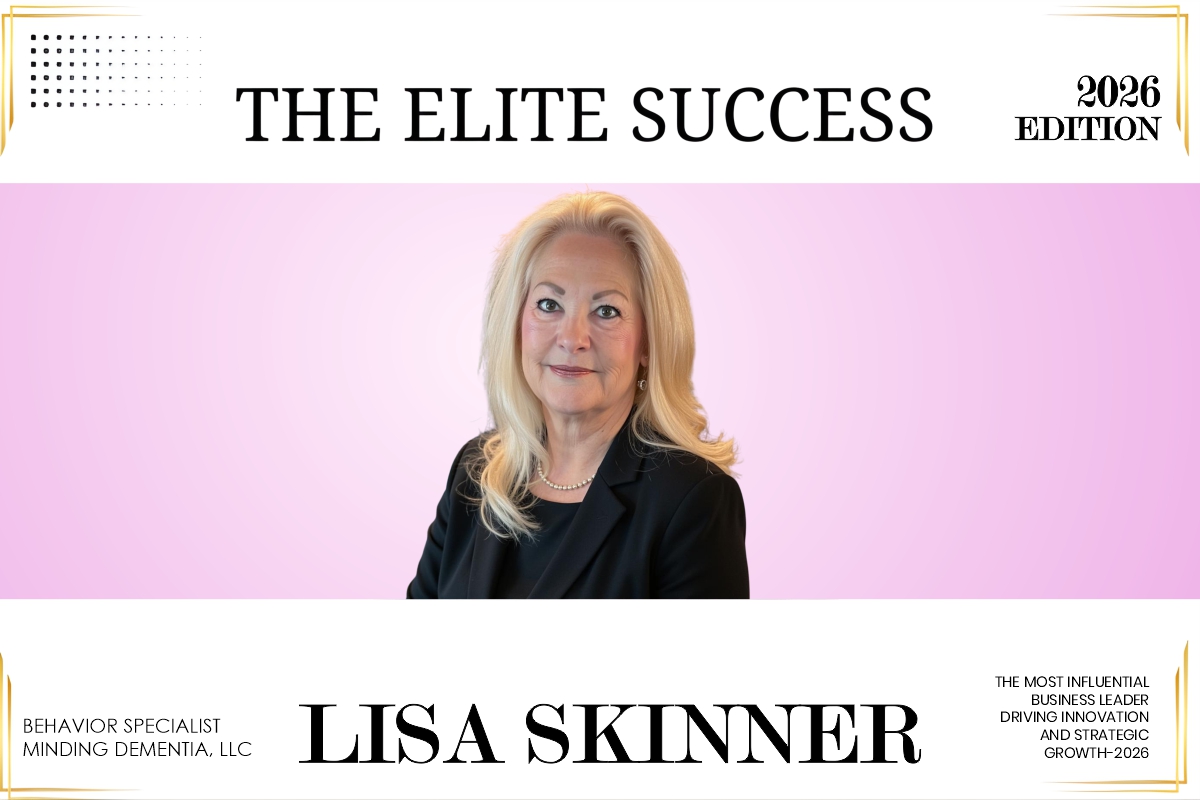
Against this backdrop, the need for leadership, innovation, and compassionate support has never been more urgent. It is in this context that we spotlight Lisa Skinner, a pioneering behavior specialist and founder of Minding Dementia, LLC, whose work transcends clinical statistics to illuminate the human experience of dementia. Skinner’s mission—educating caregivers, reframing behavioral understanding, and empowering families—addresses not only what dementia is, but how people live with it every day.
In an era defined by escalating neurological care demands and rising caregiver strain, Lisa’s story exemplifies why visionary leadership in dementia education and support deserves recognition. Her work not only aligns with global health priorities but also provides actionable insight and compassionate guidance to millions of families navigating this deeply personal journey.
Answering the Elephant in the Room
For Lisa Skinner, the decision to dedicate more than three decades to dementia and Alzheimer’s education was never driven by trends or professional convenience—it was driven by an uncomfortable truth the world continues to overlook. We are living through a global crisis that rarely dominates headlines, yet quietly affects millions of families every single day.
She often describes dementia as the “elephant in the room”—larger than life, impossible to ignore once seen, and yet persistently unspoken. It is a crisis that feels distant until it suddenly becomes personal. And when it does, it can strike anyone, at any time.
For the past 30 years, Lisa has worked with one unwavering purpose: to transform this silent crisis into a rallying call for action—one that does more than inform, one that moves hearts and leads to meaningful, practical change. She has seen firsthand what happens when families are thrust into uncertainty with little preparation or guidance: fear at diagnosis, emotional overload during care decisions, and isolation when navigating financial, housing, and long-term planning challenges.
What fuels her work is not just the rising prevalence of dementia, but the reality that societies remain dangerously unprepared for what lies ahead. Caregiver burnout, fragmented support systems, and policy gaps leave families to shoulder life-altering decisions alone. Lisa addresses the pain points most people feel but struggle to articulate—the widening gap between alarming global projections and the lack of everyday readiness at the family level.
Her approach is deliberate and deeply human. She acknowledges fear and overwhelm without resorting to jargon or false promises. Instead, she delivers a message that is practical, hopeful, and collaborative, helping families move from paralysis to clarity, and from despair to confidence.
Through her work, Lisa Skinner helps families not only understand dementia—but prepare for it, plan through it, and live with it more harmoniously. Her mission is rooted in a simple but powerful belief: when people feel seen, supported, and informed, they become capable of shaping a future that is not defined by fear, but guided by resilience, compassion, and hope.
Where Lived Experience Becomes Leadership
For Lisa Skinner, authenticity and compassion are not strategies—they are the foundation of her work. She never loses sight of the fact that her professional mission is deeply rooted in personal experience. Having lived through the diagnosis of eight family members with dementia, she understands the confusion, fear, and exhaustion families face when navigating this journey with limited guidance and fragmented support.
That lived experience shapes how she leads, writes, and speaks. Lisa often says that she does not approach dementia from a distance—she approaches it from within. She knows what it feels like when a parent suddenly forgets their adult child’s name, when a caregiver is stretched beyond their limits by relentless, around-the-clock responsibility, and when families are forced to plan for an uncertain future while struggling to manage an overwhelming present.
Her global recognition as a behavior specialist, bestselling author, and impactful speaker is inseparable from this deeply human perspective. It is what keeps her grounded as her influence grows. Even while leading organizations and publishing widely, she measures success not by accolades, but by whether families feel understood, supported, and capable of making informed decisions.
For more than three decades, Lisa has been motivated by the faces of the families she has walked beside—listening to their fears, acknowledging their burnout, and helping them find clarity amid chaos. That proximity to real lives and real pain ensures her work remains honest, empathetic, and actionable.
In blending personal loss with professional leadership, Lisa Skinner has created a mission that resonates across borders and disciplines. Her voice carries credibility because it is forged through experience, and her impact endures because it remains anchored in compassion.
Minding Dementia: Where Compassion Meets Clarity in Care
Minding Dementia, LLC was founded on a simple but urgent belief: families affected by Alzheimer’s disease and related dementias deserve more than fragmented information and reactive support—they deserve clarity, guidance, and an ally who truly understands the journey.
As a mission-driven organization, Minding Dementia is dedicated to improving the lives of individuals living with dementia and those who care for them. Its work spans education, care guidance, and practical tools, designed to help families, caregivers, clinicians, and care teams better understand and respond to behavioral changes with empathy and confidence. At the core of the organization’s approach is the integration of evidence-based practices with deeply compassionate support, ensuring that care is both informed and humane.
“We combine professional expertise with accessible learning,” Lisa Skinner explains, “so families aren’t overwhelmed by medical language or left guessing what to do next.” Through educational programs, summits, training resources, and emerging technologies, Minding Dementia bridges the gap between complex clinical realities and the everyday decisions families must make.
What sets the organization apart is its collaborative care philosophy. Rather than treating dementia as an isolated medical condition, Minding Dementia views it as a shared human experience—one that affects families, workplaces, and entire communities. The organization’s work represents a convergence of sensitivity and clarity, translating diagnosis, behavior, and progression into actionable, real-world steps.
Minding Dementia also recognizes a hard truth: too many families are navigating this journey without adequate support. Trustworthy information is scarce, planning tools are often inaccessible, and systems frequently fall short at critical moments. In response, the organization positions itself not just as an educator, but as a champion for families—standing beside them when answers are unclear and options feel limited.
In doing so, Minding Dementia is helping reshape how society approaches dementia care—moving from confusion and crisis toward understanding, preparation, and compassion.
From Theory to the Kitchen Table: The Turning Point That Redefined the Mission
In the early years of her career, Lisa Skinner approached dementia through the lens many experts do—cure-focused research, academic discourse, and policy-level conversations. Like much of the field at the time, the assumption was that progress in science and regulation would naturally translate into meaningful support for families. But reality told a different story.
She soon encountered a set of challenges that were far more immediate and complex. Trust had to be earned in a space where clinical expertise alone was not enough. Families were often overwhelmed at the moment of diagnosis and, paradoxically, least able to seek help when they needed it most. Translating dense clinical guidelines into clear, actionable strategies for caregivers proved difficult, as did building a scalable education platform that could adapt to different stages of the disease and widely varied family dynamics.
The real turning point came when Lisa stepped away from lecture halls and into living rooms, kitchens, and community centers. It was there that the true gaps became impossible to ignore. She listened to grandparents struggling to navigate digital tools, adult children haunted by guilt and fear as they made care decisions for parents they barely recognized, and frontline care workers desperate for respite and resources—only to encounter closed doors and systemic barriers.
She realized that even the most promising medical breakthroughs offered little comfort to the person sitting at the kitchen table at the end of an exhausting day. Dementia, she understood, was not only a biological crisis—it was a crisis of preparation, practical planning, and human dignity.
That realization reshaped everything. From that point forward, Lisa dedicated her work to delivering strategic, implementable solutions that families and communities could actually use—without sugarcoating the realities of the disease or offering false hope. Her approach now blends empathy with action, urgency with care, and data with everyday relevance, ensuring that support meets people where they are, when they need it most.
An Integrated Ecosystem of Education, Support, and Practical Care
Minding Dementia, LLC specializes in building real-world solutions for families, caregivers, and professionals navigating Alzheimer’s disease and related dementias. At the heart of its offerings is a comprehensive portfolio of educational programs designed for families, informal caregivers, healthcare professionals, and care teams—each grounded in evidence-based practice and delivered with clarity and compassion.
“We focus on what people can actually use,” Lisa Skinner explains. That philosophy translates into caregiving guides, behavior-management strategies, and communication tools that help families respond to day-to-day challenges with confidence rather than fear. The organization also delivers digital courses, webinars, and on-demand learning resources, allowing individuals to access guidance when and where they need it most.
Beyond education, Minding Dementia provides consultation and support services for care planning, crisis management, and major care transitions—moments when families are often most vulnerable. Its books, workbooks, and practical toolkits translate complex guidance into everyday actions, while community-building events, support groups, and advocacy partnerships ensure families never feel alone in the process.
Together, these services form an integrated ecosystem—one that empowers people not just to understand dementia, but to live with it more intentionally and humanely.
Disrupting Dementia Care Through Technology, Insight, and Continuous Innovation
Technology has played a pivotal role in expanding the reach and impact of Minding Dementia’s methodology. Through an online learning platform, families and caregivers gain on-demand access to trusted resources—removing geographic, time, and access barriers that traditionally limit support. “People don’t need help on a schedule,” Lisa notes. “They need it in the moment.”
Her podcast and television show further extend that access, offering insights tailored to disease stages, caregiver roles, and cultural context—meeting people where they are emotionally and practically. This multi-format approach disrupts the traditional, clinic-centered model of dementia care by shifting education and behavioral understanding into everyday life.
What truly differentiates the platform is its family-centered, behavior-first methodology. Rather than treating behavioral symptoms as problems to be managed in isolation, Minding Dementia reframes them as communication—signals that can be understood and responded to with empathy and skill.
Innovation remains ongoing. The organization stays competitive by listening continuously to caregivers, clinicians, and researchers, adapting content to evolving healthcare realities, and leveraging technology to remain flexible and responsive. By combining human insight with scalable digital tools, Minding Dementia continues to redefine what meaningful dementia care looks like in a changing world.
Built to Last: A Model Rooted in Evidence, Empathy, and Evolution
The enduring success of Minding Dementia, LLC is no accident—it is the result of a deliberate, values-driven approach that places families at the center of everything the organization does. From the beginning, Lisa Skinner has remained steadfast in her belief that sustainable impact in dementia care must be grounded in evidence-based practices delivered with genuine compassion.
“I’ve never lost sight of the family experience,” she says. That perspective drives a continuous commitment to ongoing education, practical caregiving strategies, and tools that are not only effective but accessible to those who need them most. Rather than overwhelming families with theory, Minding Dementia focuses on clarity, usability, and real-world relevance.
At an organizational level, success has been sustained through a culture of continuous improvement. The team actively listens to the lived experiences of caregivers, clinicians, and researchers, using those insights to refine programs, update resources, and respond to emerging challenges. This iterative approach ensures the organization evolves alongside the realities families face—rather than lagging behind them.
Equally critical is the strength of Minding Dementia’s collaborative ecosystem. The organization draws on a trusted network of experts across neurology, geriatrics, psychology, and social work, ensuring guidance reflects both scientific rigor and human understanding. Combined with a user-friendly, adaptive platform that evolves with changing technologies and needs, Minding Dementia remains relevant, responsive, and resilient.
Together, these elements form a model built not just for impact—but for longevity.
Leaving a Legacy of Trust, Preparedness, and Hope
“If there is one piece of advice I offer to emerging behavior specialists, healthcare entrepreneurs, and authors, it is this: authenticity is not optional—it is everything. The more honest and grounded you are in your work, the more credibility you will build, and the more trust you will earn. People can sense when a message is polished but disconnected from lived reality. Influence doesn’t come from positioning yourself as an expert above others; it comes from standing beside people and speaking truthfully about what they are experiencing.
I believe deeply that meaningful brands are built by listening first—especially to those who are overwhelmed, unheard, or unsure where to turn next. When your work reflects real needs and real voices, impact follows naturally.
As for the legacy I hope my work leaves behind, it begins with awareness grounded in reality. I want families, caregivers, and future healthcare professionals to truly understand why dementia is a looming global crisis—and what that means for real people today, not just for systems or statistics. Dementia is not a future problem; it is a present one, and it demands preparation, compassion, and courage.
My hope is that we move from a culture of constant crisis management to one of resilience-building—where early planning is the norm, stigma no longer exists, and communities rally around practical, humane care that honors dignity, individuality, and hope through a person-centered approach.
Ultimately, I envision a world where dementia care is proactive rather than reactive—where families are informed, supported, and connected long before they reach a breaking point. A world where no one feels alone at the kitchen table, and where compassion is not an exception, but the standard.”