“Protection means nothing if people cannot access it.”
On paper, employment law is designed to safeguard both employees and employers. In practice, however, most people only encounter it when something has already gone wrong — when a job ends without warning, when a workplace relationship deteriorates, or when a contract suddenly carries consequences no one fully anticipated. In those moments, the law rarely feels protective. It feels distant, technical, and difficult to navigate at precisely the worst time.
The modern workplace has only added to that complexity. Expectations have shifted, remote work has blurred professional boundaries, and regulatory frameworks evolve faster than many businesses can comfortably track. Situations that might once have been resolved through conversation now carry legal implications. Employees worry about fairness. Employers worry about compliance. Both are often left trying to interpret rules they were never trained to understand.
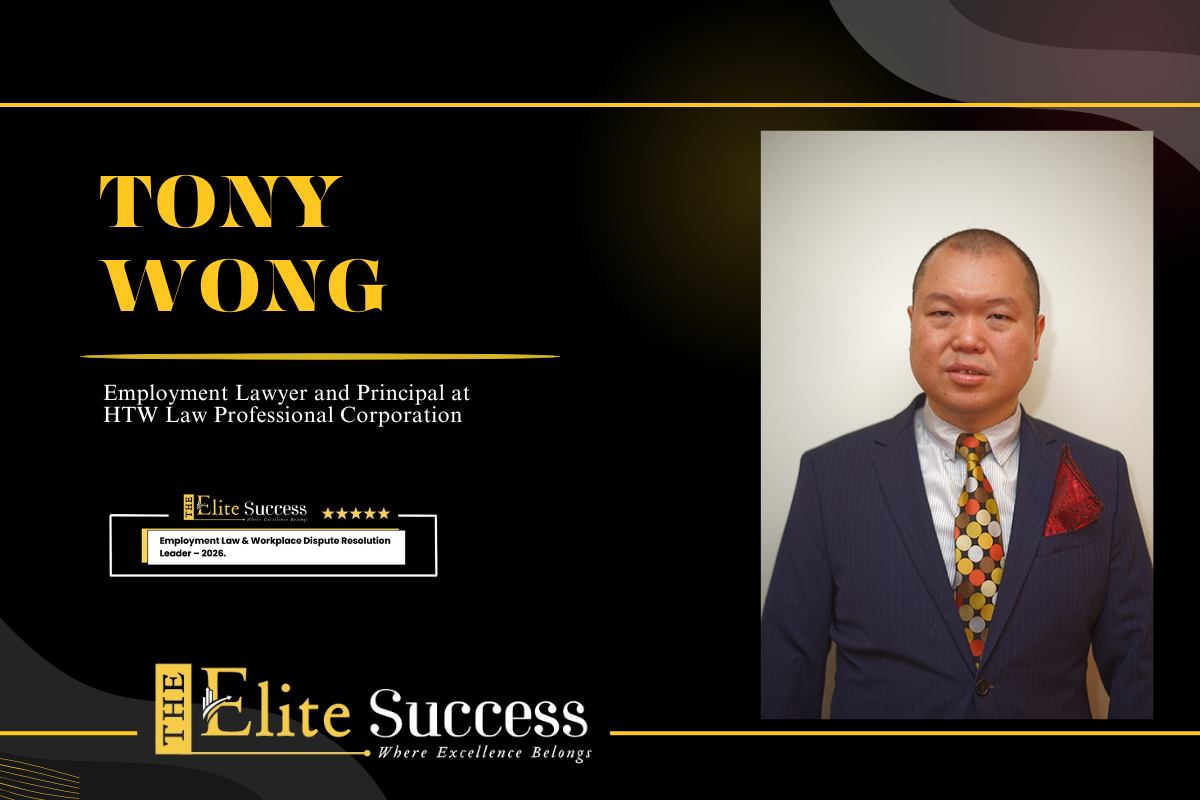
That tension between what the law promises and how it feels in practice, is where Tony Wong focused his career.
Early on, he recognized that most clients were not seeking complexity or courtroom performance. They wanted clarity. They wanted someone who could assess their position, explain the options in plain terms, and provide a practical path forward.
As Employment Lawyer and Principal of HTW Law Professional Corporation, Wong structured his practice around that philosophy. Whether advising an employee following a dismissal or guiding an employer through Ontario’s employment standards framework, his approach remains consistent: clarify the issue, define the available strategies, and move toward resolution with precision and minimal friction.
From Traditional Practice to Practical Solutions
HTW Law was founded after Tony Wong came to a straightforward conclusion: the way legal services were typically delivered was not working for many of the people who needed them most.
Employees often assumed that strong legal representation was out of reach unless they had significant financial resources. Small business owners were left to interpret employment standards and compliance rules on their own, unsure whether they were meeting their obligations. For many, the legal system felt difficult to approach, weighed down by technical language and unpredictable costs.
Wong believed there was room to do it differently.
From the beginning, he set out to build a firm that focused on people as much as the legal process. The goal was not to move files quickly or drive up billable hours. It was to give clients clear advice, practical options, and a defined path forward. Each file represented someone’s livelihood, reputation, or future. That reality shaped how the work was handled.
Early on, the primary hurdle was trust. Many prospective clients equated higher fees with better representation. Showing that a firm could be both accessible and rigorous required more than messaging. It required results. Over time, consistent outcomes built confidence in the model.
As workplace structures shifted, the firm adapted alongside them. Remote employment expanded rapidly, and digital systems became routine in professional life. Wong integrated virtual consultations and secure document platforms into the firm’s operations, allowing clients to receive counsel without attending in person. Physical distance no longer limited access. Clients across Ontario could retain the firm without logistical barriers.
Public scrutiny of workplace culture also intensified. The #MeToo movement and Black Lives Matter brought sustained attention to harassment, discrimination, and systemic inequality. Organizations faced increased accountability, and employees were more informed about their rights.
HTW Law broadened its scope accordingly. In addition to severance matters, the firm became increasingly involved in human rights claims, workplace investigations, and disputes involving hostile or toxic environments. Advice extended beyond the immediate legal question to address the broader implications for leadership, culture, and risk management.
The firm’s growth was gradual but steady. It reflected a service model that kept pace with how workplaces were actually functioning. By maintaining accessibility, consistent standards, and responsiveness to evolving expectations, HTW Law established itself as a credible presence in a changing employment landscape.
Risk Management With Legal Precision
At HTW Law, the starting point is simple: bad things happen to good people. When they do, legal counsel has to steady the client and chart a clear path forward.
The firm advises employees and employers at every stage of the employment relationship, from recruitment to termination.
For employees, HTW Law concentrates on wrongful dismissal claims, severance negotiations, constructive dismissal matters, workplace harassment disputes, and representation of federally regulated employees pursuing unjust dismissal remedies under the Canada Labour Code. Every matter begins with a close review of the employment contract, statutory entitlements, and recent court decisions so clients understand their legal position and negotiating strength. The goal is clarity from the outset—what the law provides, where leverage exists, and how best to proceed.
For employers, the firm functions as an external HR legal department. It drafts enforceable employment agreements, conducts workplace investigations, defends human rights applications, and advises on termination strategies designed to limit legal risk. The focus is straightforward risk control: policies that hold up under scrutiny, documentation that supports sound decisions, and advice informed by current case law. The work is preventive as much as responsive, aimed at reducing disputes before they escalate.
Technology plays a practical role in how the firm operates. Secure digital intake systems simplify onboarding while safeguarding confidentiality. Advanced research tools help the team stay current with evolving case law. In document-heavy disputes, digital discovery platforms identify key evidence more efficiently than traditional manual review, reducing time and expense while maintaining a thorough process.
One consistent priority in HTW Law’s practice is resolving disputes early whenever possible. Rather than defaulting to litigation, the firm prepares carefully argued demand letters grounded in current case law and shaped by the specific facts at issue. That early, focused work often leads to negotiated settlements before formal proceedings begin. The approach preserves financial resources and spares clients the strain of prolonged disputes.
In qualifying wrongful dismissal cases, HTW Law offers contingency fee arrangements. An employee who has just lost income should not be prevented from asserting legal rights because of cost. Because the firm’s compensation depends on the outcome, the arrangement strengthens access to justice and keeps the firm accountable to results.
Strategic Oversight in Employment Law
Wong is a seasoned employment lawyer at HTW Law with extensive experience representing employees and employers in Ontario. As Principal Lawyer, his role goes far beyond courtroom advocacy. He is responsible for setting the firm’s strategic direction and ensuring that the practice remains current in a fast-changing legal environment.
His Practice Covers:
- Wrongful & Constructive Dismissal: Representation in termination disputes and severance negotiations.
- Employment Contracts & Compliance: Drafting, reviewing, and updating agreements to meet evolving Ontario laws.
- Workplace Harassment & Investigations: Advising on human rights issues, internal investigations, and policy enforcement.
- WSIB & Workplace Injury Claims: Strategic guidance on claims management and dispute resolution.
- Workplace Risk & Legislative Strategy: Monitoring legal changes, auditing precedents, and proactively managing employer risk.
Wong closely monitors legislative updates and court decisions. Employment law is one of the most active and evolving areas of law. When new rulings invalidate termination clauses, Wong convenes his team immediately, revises contract templates, and audits active files before exposure becomes liability..
He also audits legal precedents and strengthens internal processes. This ensures consistency, risk management, and high professional standards across the firm.
In addition, Wong leads HTW Law’s thought leadership and public education initiatives. He publishes detailed and practical guides on wrongful dismissal, workplace harassment, AI in hiring, WSIB claims, and statutory exemptions. These resources serve the community while reinforcing internal expertise. Explaining complex legal developments in simple language helps sharpen strategic clarity.
For Wong, leadership means preparation. His role is not only to resolve disputes but to anticipate them, manage risk proactively, and position clients ahead of legal change.
When Law and Technology Collide
Today’s workplace law environment creates serious challenges for both leaders and employers. One major issue is contract enforceability. In Ontario, courts have often struck down termination clauses that try to limit employee rights below legal standards. Because of this, employment contracts written only a few years ago may no longer be valid.
Wong gives clear and practical advice: keep it simple. When employers try to add strict or aggressive clauses, those clauses often fail in court. Instead of taking risks, employers should review their contracts on a regular basis. An annual legal audit is better than checking only when a problem arises. Laws and court decisions change, and contracts must reflect those changes.
Another growing concern is the use of Artificial Intelligence in hiring and management. AI tools can unintentionally create bias by screening candidates using data linked to protected traits. Wong stresses the need for human review. Employers cannot shift their human rights duties to software.
For employees, workplace disputes are not only legal matters. Job loss, harassment, or toxic leadership can deeply affect a person’s income and identity. Providing clear guidance during uncertain times is central to Wong’s work.
The Practical Problem Solver
Tony Wong describes his personal brand as “The Practical Problem Solver.” For him, legal disputes are not about winning arguments or proving a point. They are about restoring balance and helping people move forward. His work is guided by empathy, honesty, and clear judgment.
When he advises clients, he starts with one simple question: if this were my own family member, what would I do? Sometimes the right path is strong legal action. Other times, it is early settlement to reduce stress and protect mental health. The answer depends on the situation, not ego.
Wong prepares every case as if it will go to trial. This level of preparation builds strength. Opposing lawyers know that HTW Law is serious and does not bluff. This often leads to better outcomes in negotiation.
Even so, Wong does not push litigation by default. He sees it as a tool, not a goal. His focus is always on results. Being ready for conflict, while aiming for solutions, defines his leadership style.
A Culture of Continuous Learning
Employment law changes very fast. Tony Wong believes that learning must never stop. At HTW Law, ongoing learning is not optional. It is a clear rule for everyone on the team.
When new laws are introduced, such as updates under Ontario’s “Working for Workers” rules or new privacy laws, the firm treats them like lessons to study. The team reads, discusses, and understands every change in detail. The firm also writes simple articles and guides to explain these updates to the public. This helps clients understand their rights and duties. At the same time, it trains the team and keeps their knowledge sharp.
Wong asks his lawyers to explain complex legal ideas in simple words. This improves client communication and deepens their own understanding.
When new issues appear, like cases about electronic monitoring or algorithm-based management, the firm is ready. At HTW Law, professionalism, innovation, and discipline are daily standards, not just words.
Where Preparation Meets Results
A recent constructive dismissal case shows the firm’s clear and careful approach.
A senior executive went through several demotions and was slowly pushed out of key decisions. He was left out of meetings and given fewer responsibilities. The employer said these were normal management changes and claimed that the executive chose to resign on his own.
Wong’s team studied the case step by step. They gathered detailed evidence, including emails, meeting records, and changes in reporting lines. They showed a clear pattern of unfair treatment and bad faith. Instead of focusing only on the written contract, they also relied on legal principles from important cases like Bhasin and Keays. These cases stress the duty of good faith and fairness in employment relationships.
In the end, the matter was resolved through negotiation. The executive received full severance pay and extra damages for the way he was treated. The case was settled without going to trial.
Today, the firm continues to grow across the province, leads in harassment and discrimination cases, and uses technology to serve clients better.
Anticipating the Future of Work
Looking ahead to 2026 and beyond, Wong anticipates intensified regulation of AI in workplace decision-making and continued judicial scrutiny of employment contracts.
HTW Law intends to remain proactive. Ongoing audits of internal precedents, real-time monitoring of case law, and continued thought leadership will guide the firm’s trajectory.
The broader mission remains unchanged: expand access to justice and empower both employees and small business owners with clarity.
Employment law should not feel reserved for those with extraordinary resources. It should feel navigable.
Precision in Practice, Character in Conduct
For young lawyers who want to build a strong name in employment law, Wong gives simple advice: understand people as well as you understand the law. Laws matter, but people come first. Listen carefully to your clients. Try to see the problem from their point of view.
Return calls on time. Reply to emails without delay. Write in clear and simple language. Do not use heavy legal words when plain words will do. Clients value clarity.
Find a specific area of employment law and build deep knowledge in it. Let your work speak for itself.
Most important, protect your integrity. Skills can be improved. Money can be earned again. But once your reputation is damaged, it is very hard to rebuild.
A Legacy of Resolution
When asked about legacy, Wong does not speak about scale or prestige.
He speaks about access and empowerment.
He hopes HTW Law will be remembered as a firm that demystified employment law for everyday Ontarians. A firm that combined high-level expertise with genuine empathy. A firm that ensured clients walked away not only with compensation where appropriate, but with restored confidence in a system that often feels distant.
In a profession frequently associated with conflict, Tony Wong’s leadership is measured by resolution.
In moments when livelihoods are on the line, clarity becomes power. And through accessibility, strategy, and disciplined advocacy, HTW Law continues to make that power available.
Six Defining Principles Behind HTW Law’s Approach
1. Access First – Legal help must be affordable and clear.
2. Prepare Deeply – Strong preparation drives strong outcomes.
3. Resolve Smartly – Aim for solutions, not prolonged conflict.
4. Audit Contracts – Update agreements before problems arise.
5. Control Risk – Monitor AI and compliance closely.
6. Communicate Clearly – Simplicity builds trust and confidence.