The veterinary industry faces growing complexity as rising client expectations, corporate consolidation, and limited clinical training challenge traditional practice models. Urban environments like New York amplify these pressures, requiring veterinarians to navigate diverse populations, high operating costs, and responsibilities that extend beyond routine care into public health and disaster response. In such a landscape, leadership that combines expertise, resilience, and a personalized approach is essential to maintain high standards, mentor future professionals, and deliver meaningful care.
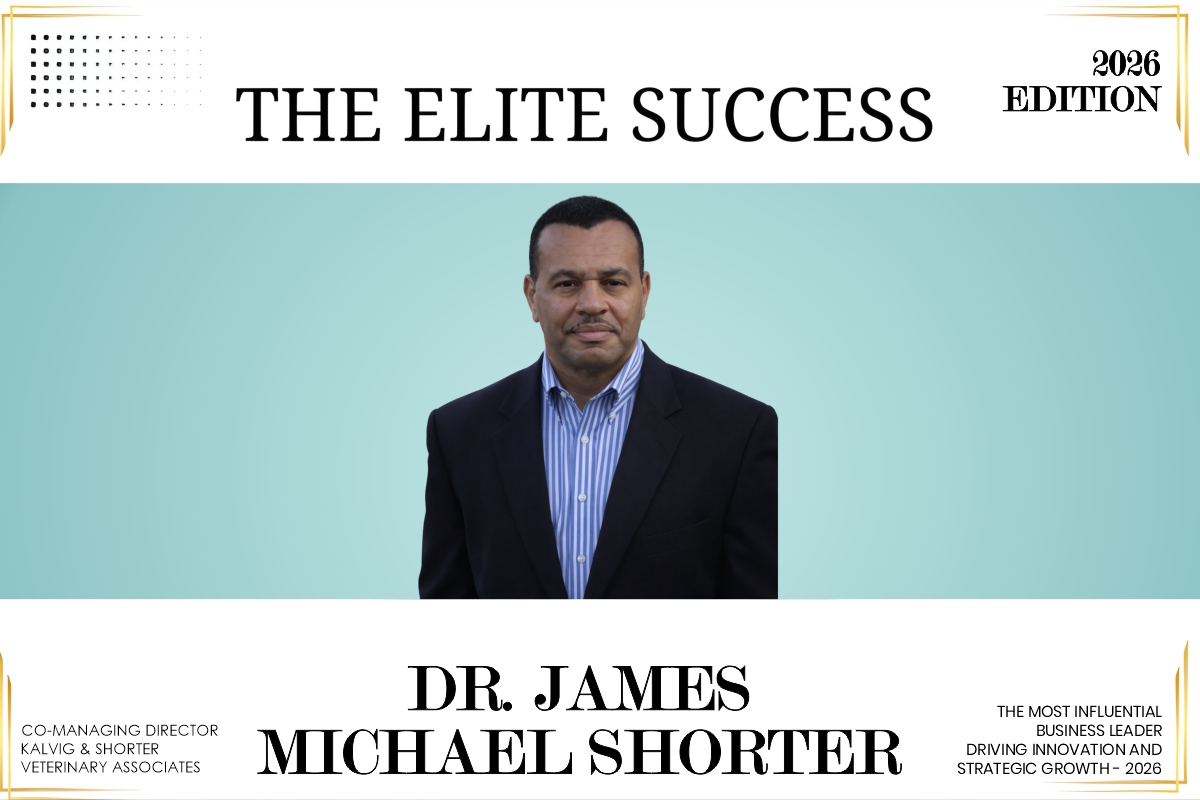
Dr. James Michael Shorter, Co-managing Director of Kalvig & Shorter Veterinary Associates, has built a practice marked by innovation, precision, and trust. With a hands-on approach, he has led efforts in emergency response, disaster preparedness, and mentorship, while cultivating a culture of personalized veterinary care. Through his leadership, the practice has become a standard for ethical practice, client engagement, and community impact, showing how vision and dedication can shape both an organization and the wider field. In recognition of his remarkable contributions and leadership in transforming veterinary care, he is being honored as “The Most Influential Business Leader Driving Innovation and Strategic Growth – 2026” by Elite Success Magazine.
A Legacy of Veterinary Excellence
Dr. James’s journey in veterinary medicine is defined by dedication, resilience, and a deeply personalized approach to care. His career path led him to New York City after more than two decades of experience running his own AAHA-accredited hospital in Teaneck, New Jersey, which he owned and operated successfully for 23 years. Seeking new challenges and opportunities, he joined the Upper East Side’s corporate-owned New York Veterinary Hospital, where Dr. Barbara Kalvig had become medical director following the passing of the previous owner.
Together, Dr. James and Dr. Kalvig recognized the value of a highly personalized style of veterinary care and made the bold decision to establish their own practice. Despite the restrictions of a ten-block non-compete, the pair successfully relocated to a new neighborhood, bringing with them a loyal and dedicated client base. By applying the same principles that had guided their previous success, they quickly established a thriving practice, built on trust, consistency, and individualized attention for each patient.
Dr. James’s ability to handle high-pressure situations is rooted in experiences far beyond the veterinary clinic. Growing up in Washington DC during the 1960s and 70s, he witnessed protests, marches, riots, gang activity, and social unrest. These formative experiences instilled instincts and resilience that later allowed him to navigate disaster scenes and emergency situations in his professional life with calm and precision. His parents, themselves trailblazers, modeled courage and adaptability, laying the foundation for Dr. James’s thoughtful and composed response to challenging circumstances.
Dr. James’s journey in veterinary medicine began with operating a long-standing hospital in New Jersey, where he honed his skills and built lasting relationships with patients and their families. Driven by a vision for innovation and personalized care, he went on to co-found Kalvig & Shorter Veterinary Associates in Manhattan. Today, as Co-managing Director, he continues to combine expertise, compassion, and dedication, shaping a practice that reflects his lifelong commitment to both animals and the people who care for them.
This vision for innovation and personalized care laid the foundation for the hospital he co-founded with Dr. Barbara A. Kalvig, bringing his approach directly to the Manhattan community.
Personalized Care Meets Urban Accessibility
Kalvig and Shorter Veterinary Associates is a full service concierge veterinary hospital founded by Dr. James M. Shorter and Dr. Barbara A. Kalvig. The hospital was established in 2013 and has continued to serve the surrounding community with a focused and personalized approach to veterinary care.
The hospital is located in historic Murray Hill in Manhattan, New York. Considered part of Midtown, Murray Hill includes landmarks such as Bryant Park, Empire State Building, Grand Central Terminal, and Chrysler Building, all located just blocks from the hospital. Its setting within this established corridor contributes to its visibility and accessibility.
The hospital operates from a Brownstone building that incorporates both the ground floor and the basement. The property features a front courtyard and a back garden, contributing to a distinctive street presence. A standalone Marquis sign was already present in the front courtyard, allowing the founders to place their signature logo prominently. The sign is visible along the entire block from Third Avenue to Lexington Avenue.
Kalvig and Shorter Veterinary Associates is still one of the only private veterinary hospitals in an area largely composed of corporate and specialty facilities. The hospital serves discerning and caring pet owners who seek comprehensive care and who generally have few limitations in pursuing thorough treatment due to their affluent status.
Building on its unique environment and personalized approach to care, the hospital extends this same philosophy into every aspect of medical treatment.
Where Human and Veterinary Medicine Converge
Kalvig & Shorter Veterinary Associates operates on a model that emphasizes extensive and detailed attention in reviewing and treating its client base through 45 minute appointments. The practice remains thorough and comprehensive in its diagnostic approach, and years of experience in medicine and surgery have helped solidify its reputation.
Its location in New York City provides the option of proper referral across various specialty areas, a valuable resource available to both the practice and its clients. Follow up is regarded as important and critical in developing client loyalty, supported by communication that clients can clearly understand.
Modern technology has enhanced both the quality and the ability to service clients in a significant way. Kalvig & Shorter Veterinary Associates utilizes advanced radiology equipment, ultrasound, Class 4 laser therapy, dental radiographs, and accurate mobile diagnostic vital monitors. With continued advancement, equipment has become smaller and simpler to use. Software programs, computers, and social media have also made a positive impact on the overall client experience.
The practice does not follow a cookbook philosophy in approaching cases and continues to rely heavily on critical thinking, common sense, and experience. That perspective has extended beyond routine clinical settings into broader medical challenges.
In the period following the 2010 Haiti earthquake, the primary zoonotic disease was leptospirosis, transmitted through urine and rodent exposure to dogs and humans due to devastation in tent cities in Port au Prince. Cholera was frequently the concern and remains present, but leptospirosis was widespread. It is a deadly disease affecting the liver and kidneys, yet it can be treated if properly diagnosed. Events such as these illustrate how closely human and animal health are connected, particularly in disaster environments where living conditions expose both populations to the same risks.
There remains a close bridge between human and veterinary medicine. Female canines have been used as animal models for malignant breast cancer in women. Porcine heart structure and dynamics are almost identical to human hearts. ACL surgery techniques were tested on equines prior to incorporation into human sports injury procedures. Educating clients about the similarities and physiological differences between pets and humans continues to be viewed as beneficial.
This deep understanding of physiology and cross-species medicine naturally positioned Dr. James to extend his impact beyond routine clinical care and into emergency response and public health.
Beyond the Clinic in Emergency Response
At Kalvig & Shorter Veterinary Associates, Dr. James’s responsibilities extend beyond traditional clinical practice into emergency response and public health coordination. As a first responder, he helped establish the MASH unit at Ground Zero and assisted in developing decontamination techniques for more than 300 dogs and their handlers who worked on the pile for six weeks. That experience led to his role as a subject matter expert with organizations including the NYC Office of Emergency Management, Tails of Hope, and experts from military, police, and first responder teams across the United States.
This area remains largely unsupported, with few structured strategies for training handlers in the field. During disasters such as hurricanes, floods, or building collapses, local veterinary hospitals often cannot remain open. Dr. Shorter addressed this gap as the principal designer of a prototype fully equipped mobile MASH unit for response dogs—a 53-foot tractor-trailer with X-ray, triage, surgical, decontamination, and ICU capabilities that can be deployed to a disaster site for up to two weeks. Developed with Tails of Hope, the prototype awaits adequate funding and challenges the assumption that injured WMD or search-and-rescue dogs can be transported to local veterinary hospitals during large-scale emergencies.
Through NYVC VERT, Dr. Shorter has helped establish clearer disaster response guidelines where procedures were previously poorly defined. His USDA accreditation, public health involvement, and ongoing collaboration with leaders in the field keep him engaged on the frontlines of emergency response.
Experiences in disaster environments have highlighted the growing risks faced by working dogs. Evolving threats—including fentanyl sprays, explosive devices, contamination with biological and chemical agents, and decayed organic material—make proper decontamination techniques essential. Events such as the Haiti earthquake further underscored the need for rapid medical evaluation, safe decontamination procedures, and deployable veterinary support systems in hazardous conditions.
Expertise in Rehabilitation and Conditioning
Dr. Shorter is also proud of his human sports certifications, including ACSM (American College of Sports Medicine) and NSCA CPT (National Strength and Conditioning Association – Certified Personal Trainer). These certifications focus on special populations, including post-surgical and post-treatment candidates, and emphasize the development of strength, aerobic capacity, and overall functional conditioning during recovery.
He applies many of the same rehabilitation principles to canine patients. While dogs differ biomechanically—moving on four limbs rather than two—the underlying concepts of conditioning, progressive strengthening, and recovery remain remarkably similar. By bridging human and veterinary rehabilitation strategies, Dr. Shorter enhances outcomes for working, athletic, and post-operative dogs alike, ensuring that they regain functional strength safely and efficiently.
The Struggle Between Cost and Quality of Care
Beyond these specialized areas, Dr. James remains deeply concerned about broader trends shaping the veterinary profession. He observes that the proliferation of corporate owned entities and specialty hospitals is creating an environment in which many clients are being priced out of the market. There is a significant disparity in cost between smaller hospitals and corporate practices. In his view, new graduate associates are increasingly taught to refer cases quickly rather than methodically working them up. The initial private visit is often less expensive than referral to larger corporate practices or specialists, yet the prevailing approach does not always prioritize that pathway.
He also notes that many veterinary schools do not have teaching hospitals where students can gain practical experience before entering the working world. This gap in clinical exposure affects the students’ hands on experience and
preparedness at the onset of a veterinarian’s career.
Practicing in New York presents its own considerations. The city is a diverse market with many ethnic persuasions, cultures, and religions. Dr. James believes that having a broader world view and cultural sensitivity allows for effective communication and relatability across different communities.
He further points out that only 1.5 percent of private veterinary practices in the United States are owned by African Americans. With what he describes as the current demonizing of DEI and woke culture, more institutions and corporations are being persuaded to view sensitivity to these initiatives as discriminatory or unfair. As a result, real disparities in training, incentive, and outreach are being neglected and will continue to be.
Having been educated at the only HBCU veterinary school, Tuskegee University, and maintaining membership in the National Association for Black Veterinarians, Dr. James remains acutely aware of these disparities and their ongoing impact within the profession.
Leading by Example with Ethics and Compassion
Dr. James leads by example, guided by an ethical approach rooted in patience, compassion, thoroughness, and sensitivity. These are basic principles, yet he recognizes they are frequently not practiced. For him, leadership is defined not by title, but by consistent conduct and a steady commitment to these fundamentals in everyday work.
He believes that developing strong communication skills is paramount. Keeping an open mind while following instincts developed from both success and failure breeds humility and sustains the desire to continue learning. Experience shapes judgment, but it also reinforces the understanding that growth is continuous.
Communicating information to all levels of people, in his view, is an art that requires constant adjustment. It demands awareness, flexibility, and clarity. Age and generational differences create challenges in bridging gaps coherently and meaningfully, and addressing those differences requires patience and thoughtful engagement to ensure understanding across varied perspectives.
This thoughtful approach to communication naturally extends to mentorship, where Dr. James applies the same principles of clarity, patience, and engagement to guide and inspire others.
Mentorship as a Core Responsibility
Under Dr. James’ leadership, Kalvig and Shorter Veterinary Associates serves as a mentor to veterinary students, minorities, and high school students. Mentorship is approached not as an obligation, but as an ongoing responsibility within the profession.
Recognition in this area holds particular meaning. Dr. James believes that whatever has been learned or achieved rests on the backs of others, past, present, and future. That perspective shapes the practice’s commitment to giving back. The objective is to pass along wisdom, guidance, and experience to colleagues and students encountered now and in the years ahead.
A consistent focus remains on mentoring, sharing experiences and knowledge unselfishly, and being available to those who seek direction. Through this approach, mentorship becomes an extension of daily practice rather than a separate initiative, reinforcing a culture of learning and professional continuity.
This same dedication to mentorship and leadership seamlessly translated into action when unprecedented circumstances demanded their expertise and commitment.
Defining Moments at Ground Zero
Kalvig and Shorter Veterinary Associates’ private response to 9 11 marked a defining chapter in its history. For six weeks at Ground Zero, the team became leaders in the veterinary care of response working dogs, establishing a legacy that extended beyond companion animal medicine. Their involvement during that period reflected a commitment responsive to extraordinary need and not limited to routine clinical care.
That same sense of responsibility has continued through sustained community outreach. Efforts have included food drives, support for Covenant House, involvement during the 2010 Haiti earthquake, and response efforts during Hurricane Sandy and Hurricane Irene. Each initiative reflects consistent engagement with causes affecting both local and broader communities.
Over time, these commitments have been paralleled by enduring relationships with clients, interns, and students. The strength of those connections is evident in the countless cards, letters, referrals, and reviews received over the years. Together, these expressions of appreciation reflect the continuity of care, professional dedication, and community presence that have defined Kalvig and Shorter Veterinary Associates.
At Kalvig & Shorter Veterinary Associates, future goals remain centered on education. The practice seeks to deepen clients’ understanding of the behavioral and physiological similarities and differences between companion animals and humans. By clarifying these distinctions and connections, the objective is to strengthen overall comprehension and ultimately improve care outcomes for the animals entrusted to them.
This commitment to educating clients and enhancing animal care reflects the guiding philosophy that informs Dr. James’s approach to mentorship and professional advice.”
True Success Lies in Giving
Dr. James offers advice grounded in experience and thoughtful practice. He believes in the importance of continually learning and maintaining humility, regardless of one’s position or achievements. When facing difficult decisions or obstacles, he encourages following one’s instincts and trusting personal judgment.
He also stresses the value of sharing knowledge and experiences openly, without concern for prestige or status. For Dr. James, true success is measured not by position, but by the willingness to give and support others, with the greatest accomplishment found in the act of giving itself. This philosophy of selfless contribution naturally extends into the lasting impact he leaves on those closest to him.
A Legacy That Extends Beyond the Clinic
Dr. James has a legacy that inspires family and others through lived experiences, offering strength and wisdom that extend beyond his immediate circle. His children often speak of how love and guidance have shaped their personal success, and he hopes these qualities will continue to influence their careers, families, and communities.
His experience in disaster response and public health has grounded his perspective in reality. Life is valuable and precious, a truth reflected in the bond between pets and their owners. That bond can overcome loneliness, debilitation, and despair through something as simple as a wagging tail or the purring of a cat.
Few professions offer the privilege of arriving at work to be greeted by an exuberant puppy that treats you as if you are the most important presence in the world. At Kalvig & Shorter Veterinary Associates, this daily connection embodies the relationships and care that define Dr. James’s approach.