Global cancer incidence is projected to surpass 35 million new cases annually by 2050, with the APAC region accounting for nearly half of the world’s cancer burden. At the same time, studies show that over 60% of oncology treatments fail to deliver optimal outcomes when based on generalized protocols, accelerating the shift toward precision oncology. Advances in molecular diagnostics, biomarker profiling, and integrated pathology have shown that personalized treatment approaches can lead to more favorable and consistent responses across several cancer types.
It is within this data-driven transformation of cancer care that scientific leaders who can integrate pathology with molecular intelligence are becoming indispensable. In the APAC region, this evolution serves as a strategic case study of how advanced oncopathology and molecular intelligence converge to translate complex biological data into clinically actionable precision oncology frameworks.
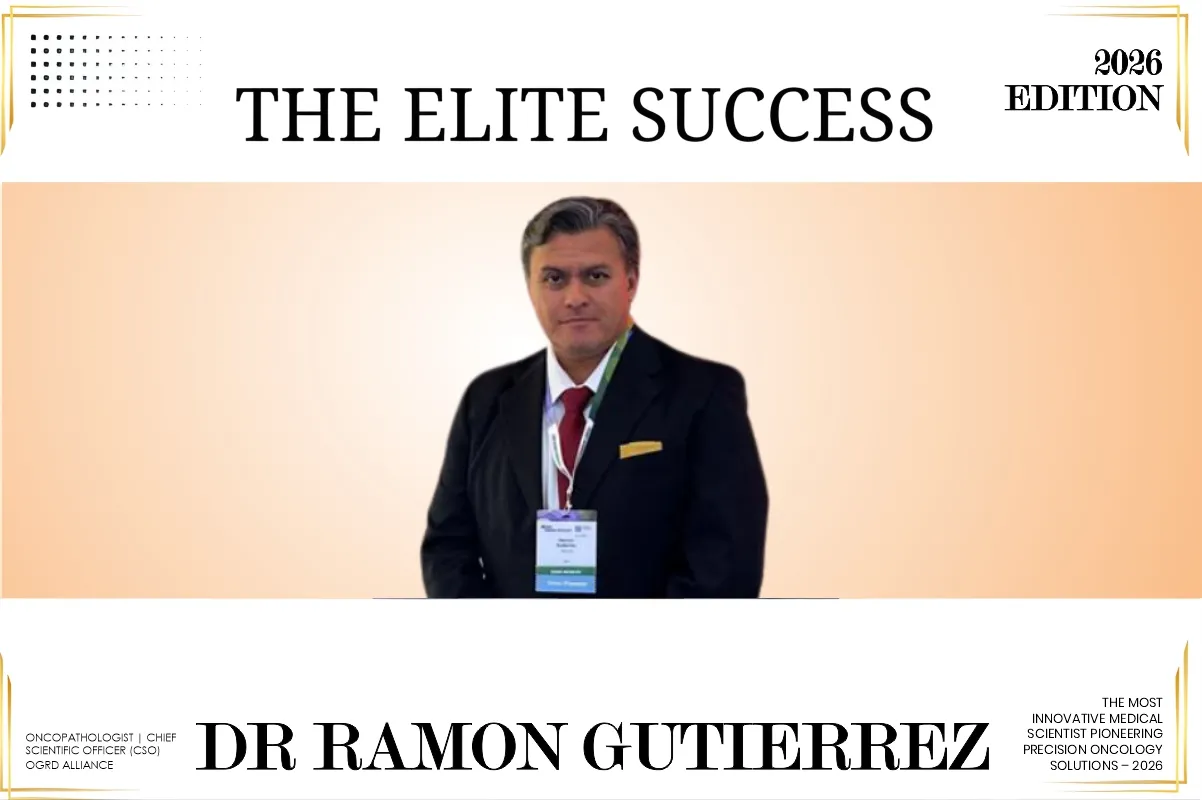
With decades of experience at the intersection of diagnostics, translational research, and precision oncology, Dr. Ramon Gutierrez has built a reputation for decoding cancer at its most fundamental level. His work focuses on understanding tumor biology not as a static diagnosis, but as a dynamic, evolving system—one that demands precision, context, and continual reassessment. In doing so, he has helped redefine how pathology supports modern cancer care, moving beyond conventional histology toward integrated, data-driven insights.
At OGRD Alliance, Dr. Ramon Gutierrez plays a pivotal role in advancing precision oncology solutions that align scientific rigor with real-world clinical impact. His leadership contributes to the development of robust diagnostic frameworks, biomarker-driven strategies, and collaborative research models that empower oncologists to make more informed, personalized treatment decisions. This approach is particularly critical in the diverse and complex healthcare landscapes of APAC, where population variability and access challenges require solutions that are both globally informed and locally relevant.
Recognized as The Most Innovative Medical Scientist Pioneering Precision Oncology Solutions – 2026, Dr. Gutierrez represents a new generation of medical scientists—those who combine analytical depth with visionary thinking. His journey is not only a testament to scientific excellence but also a compelling narrative of how precision, collaboration, and purpose can reshape the future of cancer care.
Where Immunity Becomes Intelligence
For Dr. Ramon Gutierrez, the journey into personalized immunotherapy did not begin with a single breakthrough moment, but with a deeper scientific realization: that the immune system is, at its core, an information network. “Dendritic biology revealed that immunity is fundamentally about information processing. When you work at that level, you can achieve modulation without toxicity, and coherence without force.” That insight would go on to shape the arc of his research and clinical thinking.
As an oncopathologist, Dr. Ramon Gutierrez spent years observing how conventional cancer therapies—while powerful—often relied on blunt mechanisms that placed heavy physiological burdens on patients. Tumors could be reduced, but at the cost of systemic toxicity and compromised quality of life. It was this imbalance that drew him toward dendritic cells, the immune system’s master communicators, responsible for interpreting signals and orchestrating precise immune responses.
In studying dendritic biology, he saw a different possibility for cancer treatment—one where the immune system is not overpowered, but educated. Rather than forcing an aggressive response, personalized immunotherapy seeks to restore clarity within immune signaling, allowing the body to recognize and respond to cancer in a more natural, controlled manner. This approach holds the key to durability and safety in long-term cancer care.
Today, Dr. Gutierrez’s work reflects this philosophy. His focus remains on designing immunotherapeutic strategies that respect biological intelligence, tailoring interventions to the patient’s unique molecular and immunological landscape. By aligning treatment with the immune system’s inherent logic, he continues to advance a vision of oncology where precision replaces aggression—and where healing begins with understanding.
One Objective, Many Roles
To an outside observer, Dr. Ramon Gutierrez’s professional life may appear divided across multiple demanding roles—Chief Scientific Officer, consultant, researcher, and strategic advisor. Yet he views them not as separate responsibilities, but as interconnected expressions of a single mission. “All my roles serve the same objective,” he says. “Building immune systems that remain functional under real-world conditions.”
This unifying lens allows him to move fluidly between laboratory science, clinical insight, and strategic decision-making without fragmentation. As a researcher, Dr. Gutierrez explores the fundamental mechanisms that govern immune resilience and failure. These findings do not remain confined to academic discourse; they inform his work as a CSO, where scientific rigor must translate into scalable, deployable solutions. Every hypothesis is tested against a simple question: will it work outside controlled environments, in the complexity of real patients and real healthcare systems?
His consulting role further grounds this thinking. Engaging with clinicians, institutions, and global collaborators exposes him to diverse constraints—regulatory, infrastructural, and population-specific. Rather than diluting his focus, these perspectives sharpen it. They ensure that innovation is not designed for ideal scenarios, but for variability, unpredictability, and long-term sustainability.
Dr. Gutierrez often describes balance not as time management, but as alignment. By anchoring every role to the same scientific and clinical objective, he avoids competing priorities. The result is a cohesive body of work where strategy is informed by biology, and biology is shaped by practical realities. In an era where specialisation can easily lead to silos, his integrated approach demonstrates how leadership in precision oncology is most effective when science, application, and vision move in concert.
Leading with Evidence, Not Echo
In consulting and innovation, Dr. Ramon Gutierrez is guided by a leadership philosophy that resists noise and favors substance. “Scientific honesty, regulatory foresight, and long-term defensibility matter far more than short-term visibility,” he says. In an ecosystem often driven by headlines, rapid scaling, and accelerated claims, his approach is deliberately measured—rooted in evidence, compliance, and durability.
As a scientific advisor, he places uncompromising value on truthfulness in data interpretation. For Dr. Gutierrez, innovation that is not reproducible or regulator-ready is not innovation at all, but risk deferred. He advocates building solutions that can withstand regulatory scrutiny, clinical variability, and time itself. This perspective shapes how he evaluates research programs, advises institutions, and structures long-term scientific strategy.
That same discipline extends to his views on institution-building. Successful scientific organizations are not defined by scale or funding alone, but by internal coherence. “Clarity of purpose, methodological rigor, and humility before data are essential,” he notes. Teams must understand not only what they are building, but why—and be prepared to change course when evidence demands it.
In practice, this means fostering cultures where questioning is encouraged, negative data is respected, and assumptions are continually stress-tested. Dr. Gutierrez emphasizes that humility before data is not a weakness, but a safeguard against overconfidence. It is what allows institutions to adapt without losing credibility.
By combining principled leadership with scientific restraint, he exemplifies a model of innovation that values endurance over immediacy. In precision oncology—where lives, trust, and long-term outcomes are at stake—his leadership underscores a vital truth: progress is most powerful when it is honest, disciplined, and built to last.
The Architecture of Credibility
For Dr. Ramon Gutierrez, personal branding is not about visibility, narrative control, or influence metrics—it is about structure. “My personal brand is structural credibility,” he says. “I avoid exaggeration and focus on building platforms that can be interrogated, audited, and transferred.” In a scientific landscape where perception can often race ahead of proof, this stance is both deliberate and rare.
As an oncopathologist and scientific leader, Dr. Gutierrez has consistently chosen depth over display. Rather than positioning himself at the center of innovation narratives, he concentrates on designing systems—diagnostic frameworks, research models, and scientific platforms—that stand independently of individual authority. These systems are built to be examined critically, validated externally, and sustained beyond their original architects.
This philosophy reflects his belief that true credibility is cumulative and resilient. Platforms that can be audited invite trust; those that can be transferred enable scale without distortion. In consulting and advisory roles, this translates into strategies that prioritize documentation, reproducibility, and governance from the outset. Every assumption is traceable, every outcome defensible.
Dr. Gutierrez often notes that exaggeration, while temporarily rewarding, weakens institutions over time. Structural credibility, by contrast, compounds. It allows science to move forward without reputational fragility and enables collaboration across borders, disciplines, and regulatory environments.
By defining his personal brand through rigor rather than rhetoric, he challenges prevailing notions of thought leadership. His work demonstrates that the most enduring influence in precision oncology does not come from being the loudest voice in the room, but from building foundations strong enough to support scrutiny, succession, and long-term impact.
About OGRD Alliance
OGRD Alliance is an international biotechnology organization dedicated to advancing innovation, strategic project management, and scientific excellence within the life sciences sector. The company specializes in the research, development, and global deployment of immunobiological platforms that aim to transform how complex diseases—particularly cancer—are approached through precision science and structured evidence frameworks.
Central to OGRD Alliance’s mission is the integration of strategic management with scientific rigor, ensuring that each project under its portfolio is optimized for growth, sustainability, and real-world relevance. The organization focuses on turning high-impact ideas into tangible solutions by collaborating with multidisciplinary teams, industry partners, and regulatory experts to advance biotechnology initiatives with measurable outcomes.
A flagship initiative within the Alliance’s ecosystem is the OncoVix Program and the proprietary PLPC (Phospholipoproteomic Complex) platform, which exemplify its commitment to structured, non-cellular immunobiological innovation. This platform integrates modules such as PLPC-DB—designed to activate immune recognition pathways—PLPC-NX, a nutritional technology aligned with metabolic regulation, and STIP (Structured Traceability and Immunophenotypic Platform) to ensure regulatory readiness and reproducibility.
Underpinned by international presentations, peer-reviewed publications, and patent filings, OGRD Alliance bridges scientific discovery with global deployment, expanding its initiatives across Asia, the Middle East, Europe, and other regions. Its strategic network—spanning regulatory, financial, and scientific disciplines—supports ethical, traceable, and scalable innovation.
Overall, OGRD Alliance represents a new model in biotechnology: one where science, strategy, and structure are harmonized to create solutions that are auditable, transferable, and impactful on a global scale.
Building for Longevity, Not Velocity
Dr. Ramon Gutierrez is clear that OGRD Alliance was never designed to chase rapid scale or short-term milestones. “From the beginning, the organization was built for durability, not acceleration,” he says. Its long-standing success, he explains, is anchored in a set of principles that prioritize resilience over speed—and structure over spectacle.
- Traceability before scalability: At OGRD Alliance, no platform is scaled unless its biological effects can be fully traced, documented, and audited. Dr. Gutierrez emphasizes that credibility in life sciences is cumulative. By ensuring that every outcome is reproducible and reviewable, the organization builds trust with regulators, collaborators, and clinical stakeholders—long before expansion becomes a consideration.
- Integration over fragmentation: Rather than treating therapy, prevention, diagnostics, and regulation as isolated domains, OGRD Alliance approaches them as a single, continuous system. This integrated model allows scientific decisions to remain aligned with clinical realities and regulatory expectations. He notes that fragmentation often creates downstream risk, while integration creates coherence and long-term adaptability.
- Structural defensibility: The Alliance’s platforms are designed to be difficult to replicate—not through secrecy, but through layered complexity and methodological depth. “We build systems that are defensible because they are structurally sound,” Dr. Gutierrez explains. Each platform is supported by interdependent processes, data frameworks, and governance models that cannot be easily extracted or copied in isolation.
Together, these principles allow OGRD Alliance to evolve alongside scientific advances and regulatory change without destabilizing its foundation. By resisting the pressure to move fast and instead choosing to build right, the organization has created a model of innovation that endures—quietly, credibly, and with purpose.
From Linear Intervention to Biological Architecture
At OGRD Alliance, technology is not applied as an interface layer—it is embedded into the very architecture of the PLPC Platform™. Dr. Ramon Gutierrez explains that its value lies in coherence, not complexity for its own sake. “The technology is architectural rather than superficial,” he says. At the core of this design is STIP™, a system that integrates human ex vivo data, biomarker traceability, and documentation logic into a single regulatory language. This allows clinicians, institutions, and regulators to engage with advanced immunology transparently, without reliance on opaque algorithms or animal-derived assumptions.
For customers, this architecture translates into seamless interaction across scientific, clinical, and regulatory domains. Decisions are grounded in traceable human data, enabling clarity, reproducibility, and confidence at every stage. Rather than adding layers of interpretation, the platform simplifies complexity by making immune behavior intelligible and auditable in real-world settings.
This same architectural philosophy underpins how PLPC disrupts traditional oncology and immunotherapy. Conventional cancer care often follows a linear path—diagnose, intervene, and wait for outcomes. PLPC replaces this sequence with a systems-based approach, addressing immune readiness, signaling integrity, and therapeutic compatibility simultaneously. Dr. Ramon Gutierrez describes it as restoring context before applying force.
Importantly, PLPC-DB™ is not positioned as a replacement for established therapies such as chemotherapy, radiotherapy, or checkpoint inhibitors. Instead, it rebuilds the immune terrain on which these interventions depend. By stabilizing immune signaling and biological coherence, existing treatments can perform with greater efficacy and reduced toxicity—without escalation.
In shifting oncology from isolated intervention to integrated immune architecture, PLPC reframes how technology supports care: not by competing with medicine, but by enabling it to work as biology intended.
Redefining Immunoceuticals Through Structure
PLPC-NX™ was never conceived as a conventional supplement line. Dr. Ramon Gutierrez is unequivocal on this point: it is a structural immunoceutical system, engineered using the same immune architecture principles that define PLPC-DB™, but adapted for non-clinical yet biologically rigorous use. “We applied the same discipline,” he notes, “because biology does not change simply because the application is preventive rather than therapeutic.”
At its core, PLPC-NX™ is a next-generation GRAS immunoceutical platform built on a 4-line AM/PM engineered ecosystem and a 6-axis biomimetic architecture. Each formulation is validated through human ex vivo immune assays, demonstrating measurable, reproducible biological effects without cytotoxicity. These outcomes place PLPC-NX™ firmly outside the realm of marketing-driven wellness products.
Regulatorily, the platform operates under notification-only GRAS pathways, allowing for rapid deployment without sacrificing documentation, traceability, or scientific integrity. For Dr. Gutierrez, this balance is intentional. The objective is not speed for its own sake, but accessibility without compromise—bringing immune modulation into preventive contexts while preserving the structural credibility that defines the PLPC ecosystem.
Strategic Design, Functional Lines, and Market Impact
The PLPC-NX™ platform is organized into four distinct functional lines, each engineered around a specific biological intention rather than symptom targeting. T-Defense™ focuses on immune vigilance and apoptosis-safe surveillance. Regenera™ addresses chronic inflammatory resolution and immune repair. Vitalis™ supports redox balance, circadian alignment, and longevity biology, while Sport™ enables recovery and performance resilience without stimulant dependence. Importantly, all four lines exceed the IL-10/IL-6 functional threshold, demonstrating consistent, directional immune modulation across the system.
Strategically, PLPC-NX™ serves as a critical pillar within the broader PLPC Platform™. It enables market entry in under three months, creates early revenue streams independent of clinical trial timelines, and opens institutional adoption pathways—from preventive health systems and corporate wellness programs to sovereign-level initiatives. Dr. Gutierrez describes it as a biological bridge between prevention and oncology, not a divergence from either.
For investors and partners, PLPC-NX™ represents lower risk, faster validation, and meaningful strategic optionality. Crucially, it reinforces the core PLPC architecture rather than diluting it—extending immune systems thinking into everyday resilience while preserving scientific depth, coherence, and long-term defensibility.
Staying Ahead by Staying Grounded
For Dr. Ramon Gutierrez, remaining at the forefront of emerging discovery is less about anticipation of trends and more about sustained proximity to evidence. He deliberately stays embedded in peer-reviewed science, international congresses, and real-world clinical data, viewing these arenas as the only reliable signals of meaningful progress. “Trends come and go,” he notes, “but biology is consistent if you are willing to look closely enough.”
This grounding shapes how innovation is approached across his work at OGRD Alliance. Rather than adopting every new concept that gains visibility, Dr. Gutierrez applies a disciplined filter: relevance to human biology, translational feasibility, and structural reproducibility. Competitiveness, in his view, does not come from speed or novelty alone, but from scientific honesty—especially about limitations. By acknowledging what is not yet understood or applicable, systems can be designed to evolve without breaking.
As discoveries emerge in areas such as membrane microdomains, immune synapse dynamics, and redox biology, they are not layered superficially onto existing platforms. Instead, they are integrated only when they can be expressed as structured, testable, and auditable components. This ensures that innovation strengthens the architecture rather than destabilizing it.
Dr. Gutierrez often emphasizes that proximity to biology is the ultimate competitive advantage. Staying close to real immune behavior—rather than abstracted models—allows platforms to remain adaptive while preserving coherence. In an environment where innovation is frequently measured by visibility, his approach offers a different metric: durability through evidence. By anchoring discovery to structure and humility, he continues to advance systems that remain relevant, credible, and resilient as science itself evolves.
Building Systems, Not Just Careers
“When I speak to young medical scientists, I encourage them to look beyond techniques and titles and learn to think in systems. Biology does not operate in isolation, and neither should science. Understanding how molecular mechanisms, immune signaling, clinical application, and regulation intersect is no longer optional—it is foundational. I also advise learning the language of regulation early. Regulatory frameworks are not obstacles to innovation; they are the structures that allow good science to reach people safely and credibly. Above all, I urge respect for biological complexity. Simplification has its place, but oversimplification is where science begins to fail.
Innovation, in my experience, comes not from forcing biology into predefined models, but from listening carefully to what biological systems are already telling us. Humility before data is a discipline worth cultivating early. It will protect both scientific integrity and long-term relevance.
Looking ahead, the legacy I hope to leave is not tied to a single platform or discovery. What matters to me is contributing to a broader shift toward immune-centric systems medicine—an approach where prevention, therapy, and regulation are no longer treated as separate domains, but as parts of a coherent whole. I envision a future in which immune readiness is addressed before disease escalates, therapeutic interventions are biologically aligned rather than aggressive, and regulatory science evolves in parallel with discovery.
If that shift takes root, individual innovations will matter less than the systems they enable. And that, to me, is the most meaningful outcome: decoding cancer with precision by building biological systems that are structurally sound, biologically respectful, and designed to serve both present and future generations.”