In today’s global economy, business leadership demands more than growth strategies and market expansion—it requires the ability to navigate an increasingly complex regulatory environment. According to the Financial Action Task Force (FATF), global efforts to combat financial crime have intensified over the past decade, with countries adopting stricter frameworks aligned with its 40 international recommendations designed to prevent money laundering and terrorist financing. At the same time, regulatory scrutiny continues to increase across sectors such as finance, fintech, real estate, and corporate services. A recent report by the United Nations Office on Drugs and Crime estimates that between 2% and 5% of global GDP—roughly $800 billion to $2 trillion—is laundered each year, underscoring why governments and regulators are strengthening compliance requirements worldwide.
For business leaders, this creates a delicate balancing act. On one hand, companies must innovate, scale, and remain competitive in a rapidly evolving global marketplace. On the other, they must comply with increasingly sophisticated regulatory frameworks designed to ensure transparency, accountability, and financial integrity. In industries subject to anti-money laundering (AML) obligations, this challenge becomes even more pronounced. Organizations must align their operations with international standards such as FATF recommendations while simultaneously meeting local regulatory frameworks and sector-specific compliance requirements.
Another critical challenge lies in regulatory interpretation. Regulations are often principle-based rather than prescriptive, meaning they establish overarching expectations but rarely provide detailed operational instructions. As a result, companies must determine how these principles apply to their specific business models, operational structures, and risk exposure. This complexity requires not only technical expertise but also strategic foresight—leaders must ensure compliance while preserving efficiency, innovation, and growth.
Increasingly, forward-thinking organizations are discovering that the most effective approach is not to treat compliance as a separate control mechanism, but to embed it at the very core of the organization. When compliance becomes integrated into governance structures, financial reporting systems, and operational processes, it evolves from a regulatory burden into a source of resilience, trust, and long-term sustainability.
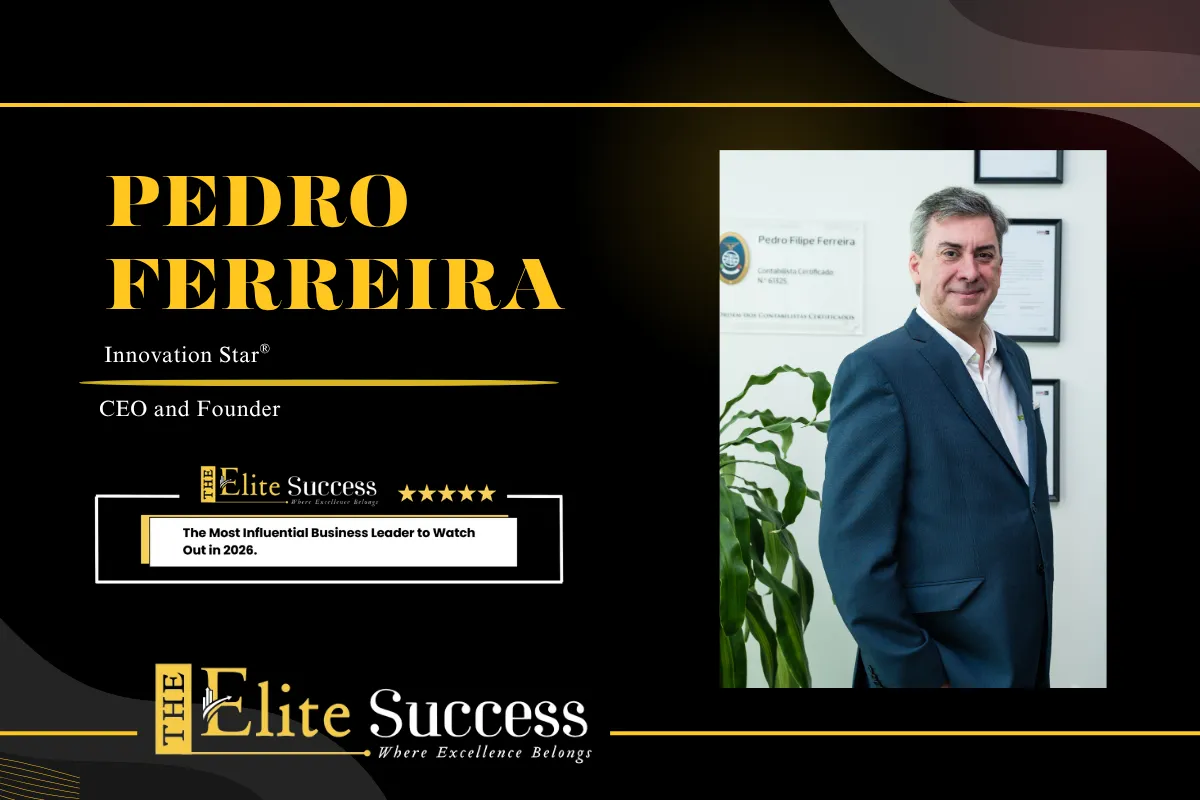
It is within this demanding and highly regulated landscape that visionary leaders are redefining the role of compliance in modern business strategy. Among them is Pedro Ferreira, CEO and Owner of Innovation Star Consultants LLC—a leader who has built his organization around the belief that effective compliance, when strategically implemented, can become a powerful catalyst for organizational growth and global credibility.
Redefining Influence in Compliance and Governance
Recognition as one of the most influential business leaders to watch in 2026 carries different meanings depending on the industry. In the world of compliance and governance, however, influence is rarely measured by visibility alone. Instead, it is defined by the ability to build trust, guide institutions toward principled decisions, and strengthen the systems that safeguard financial markets.
For Pedro Ferreira, CEO and Owner of Innovation Star Consultants LLC, influence is deeply tied to credibility. In an industry built on regulatory responsibility and ethical accountability, he believes that authority is not simply granted by position—it is earned through consistent guidance and principled leadership.
“In compliance and governance, influence is fundamentally about credibility and trust,” Pedro explains. “It’s about helping institutions make sound decisions, strengthening the frameworks that protect financial systems, and supporting the professionals who work every day to uphold integrity within their organizations.”
From his perspective, meaningful influence emerges when organizations begin to view compliance not as a regulatory burden but as a natural component of responsible business practice. When governance frameworks are embedded into the fabric of an organization—across leadership structures, operational systems, and team culture—they transform from a control mechanism into a foundation for resilience and sustainable growth.
Pedro’s leadership philosophy reflects this same long-term thinking. Rather than focusing on short-term achievements or rapid recognition, he has built his professional approach around endurance, coherence, and disciplined progress. He believes that lasting institutions are not created through isolated successes but through years of consistent effort and principled decision-making.
“Sustainable progress takes time,” he notes. “Enduring organizations and reputations are built through patience, thoughtful strategy, and an unwavering commitment to quality and integrity.”
This mindset has gradually shaped Pedro’s personal brand within the compliance and financial governance sector. Colleagues and partners often associate his leadership with reliability, measured decision-making, and a commitment to building systems that stand the test of time. In fields where trust is paramount, these qualities become defining assets.
For Pedro, influence is therefore less about individual recognition and more about creating environments where ethical standards, transparency, and responsible governance become deeply embedded within organizations—ensuring that integrity remains at the core of long-term success.
Principles That Guide Leadership
Beyond strategy meetings and regulatory frameworks, Pedro Ferreira’s leadership is grounded in a set of core principles that shape how he approaches both business and life. While his work in compliance and governance requires technical expertise and strategic insight, he believes that enduring leadership ultimately rests on personal values.
For Pedro, four guiding principles remain constant: curiosity, innovation, responsibility, and respect for people. These values not only inform his decision-making but also influence the culture he strives to build within Innovation Star Consultants LLC.
Curiosity, he explains, is essential in an industry that evolves as rapidly as the financial and regulatory landscape. “Leaders must remain lifelong learners,” Pedro says. “Regulations, financial systems, and global risks are constantly changing. Staying curious allows us to adapt and remain effective in a complex environment.”
Innovation is another cornerstone of his leadership philosophy. While often associated with technology, Pedro believes innovation also lies in how organizations approach governance, problem-solving, and institutional development. For him, forward-thinking leadership means continually re-evaluating systems and finding smarter, more effective ways to address emerging challenges.
Responsibility, however, sits at the very center of leadership. In sectors linked to financial integrity and compliance, the consequences of leadership decisions extend far beyond individual organizations. “Leadership carries weight,” he notes. “The choices we make can influence institutions, markets, and public trust.”
Finally, Pedro emphasizes respect for people as a defining element of meaningful progress. No organization succeeds through individual effort alone. Strong leadership, he believes, recognizes the power of collective commitment—where teams work together toward a shared purpose and are supported, valued, and empowered to succeed.
Building Innovation Star: Bridging Regulation and Real-World Implementation
The story behind Innovation Star Consultants LLC begins with a challenge that many organizations across the world continue to face: the growing complexity of regulatory compliance. As financial regulations expanded and global standards became more sophisticated, businesses increasingly found themselves navigating frameworks that were difficult to interpret and even harder to implement effectively.
For Pedro Ferreira, this gap between regulation and practical execution became impossible to ignore. Drawing from his professional experience in financial governance and compliance advisory, he repeatedly encountered organizations that genuinely wanted to operate ethically and within regulatory expectations but struggled to translate evolving standards into operational systems.
“When I founded Innovation Star, the idea came from a simple observation,” Pedro explains. “Businesses were expected to comply with increasingly complex regulatory frameworks, yet many lacked the operational support needed to implement those regulations in a practical and structured way.”
In particular, areas such as Anti-Money Laundering (AML) and Counter-Terrorism Financing (CFT) compliance were becoming highly technical, requiring specialized expertise that many companies did not possess internally. Pedro recognized that what organizations needed was not only regulatory interpretation but also strategic guidance on integrating compliance into their everyday operations.
“In many cases, the challenge wasn’t willingness—it was translation,” he notes. “Companies needed help turning regulatory expectations into systems that actually work within their business environment.”
This insight ultimately shaped the founding vision of Innovation Star: a multidisciplinary advisory firm designed to bridge the gap between regulation and implementation. Rather than treating compliance as a standalone function, the firm focuses on integrating governance, financial advisory, and regulatory compliance into a unified operational model.
The vision also aligned closely with the evolving regulatory environment of the United Arab Emirates, where authorities have strengthened financial integrity frameworks in line with global standards set by the Financial Action Task Force. As regulatory expectations increased—particularly for Designated Non-Financial Businesses and Professions (DNFBPs)—Innovation Star positioned itself to help organizations navigate this transformation with clarity, structure, and strategic insight.
Navigating Crisis and Regulation: The Turning Point for Innovation Star
Building a compliance advisory firm in a rapidly evolving regulatory landscape is rarely straightforward. For Pedro Ferreira, the early years of Innovation Star Consultants LLC were defined by both opportunity and challenge, particularly as the regulatory environment in the United Arab Emirates underwent significant transformation.
During this period, the country intensified its efforts to strengthen Anti-Money Laundering (AML) and financial transparency frameworks in alignment with global standards promoted by the Financial Action Task Force. As a result, entire sectors—including real estate agencies, accounting firms, corporate service providers, and precious metals dealers—were required to adopt stricter compliance practices as part of the Designated Non-Financial Businesses and Professions (DNFBP) framework.
For many organizations unfamiliar with regulatory environments, the new obligations represented a major operational shift. Businesses were suddenly required to conduct AML risk assessments, develop internal compliance policies, appoint compliance officers, register on reporting systems such as the goAML platform, and establish mechanisms for reporting suspicious transactions.
Pedro recalls that the challenge for many companies was not a lack of willingness, but a lack of operational clarity. “Our role was not simply to interpret regulations,” he explains. “It was to translate them into structures that businesses could realistically implement within their daily operations.”
The emergence of the COVID-19 pandemic added another layer of complexity. As companies across industries faced financial uncertainty and operational disruptions, they were still required to meet strict compliance expectations. Remote work environments also created challenges for monitoring transactions, conducting due diligence, and maintaining proper compliance documentation.
In response, Innovation Star’s role expanded significantly. The firm became not just a regulatory advisor but a strategic partner helping organizations adapt to unprecedented conditions while maintaining regulatory integrity.
According to Pedro, the company’s growth did not come from a single defining moment but from consistent performance during this critical period. As authorities—particularly the UAE Ministry of Economy and other supervisory bodies—increased inspections and enforcement across DNFBP sectors, many organizations recognized that compliance could no longer remain a secondary administrative function.
By guiding clients through regulatory inspections, AML framework implementation, remediation programs, and risk assessments, Innovation Star gradually built trust within the market. Its multidisciplinary approach—combining AML compliance, financial advisory, governance consulting, and professional training—further strengthened its reputation as a trusted advisor in the UAE’s evolving compliance landscape.
Building Trust Through Long-Term Partnerships
Sustained success in the compliance advisory sector rarely comes from short-term engagements. Instead, it is built on credibility, consistency, and long-term relationships. For Innovation Star Consultants LLC, these principles have played a central role in establishing both a strong market reputation and an exceptional client retention record.
According to Pedro Ferreira, the firm’s success is fundamentally rooted in how it approaches client partnerships. Compliance, he explains, is not a one-time regulatory exercise but a continuous process that evolves alongside changing regulations, expanding business operations, and emerging financial risks.
“Our success is rooted in relationships,” Pedro says. “We see every engagement not as a single project, but as the beginning of a long-term partnership where we grow alongside our clients.”
Three guiding principles shape this approach. The first is tailored solutions. Each organization operates within a unique regulatory environment influenced by its industry, corporate structure, and geographic exposure. Rather than relying on generic compliance templates, the firm focuses on designing frameworks that reflect each client’s specific risk profile and operational reality.
The second principle is practical implementation. In Pedro’s view, compliance advice must extend beyond documentation. Policies, procedures, and internal controls must function effectively within the organization’s daily operations. “Our objective is not simply to produce reports,” he explains, “but to ensure that compliance systems genuinely work for the business.”
The third pillar is knowledge transfer. Innovation Star places significant emphasis on empowering its clients through structured training and continuous advisory support. By helping organizations build internal compliance capabilities, the firm encourages a culture where regulatory responsibility becomes embedded within everyday business practices.
Together, these principles have allowed Innovation Star to build enduring partnerships—transforming compliance advisory from a transactional service into a collaborative and trusted relationship.
Comprehensive Solutions for a Complex Regulatory Landscape
At Innovation Star Consultants LLC, the service portfolio has been carefully designed to help organizations navigate regulatory complexity while simultaneously strengthening their financial and operational foundations. Under the leadership of Pedro Ferreira, the firm delivers integrated advisory services across AML/CFT compliance, Targeted Financial Sanctions (TFS), financial advisory, and governance frameworks, with a strong focus on regulated sectors in the United Arab Emirates.
From a compliance standpoint, the firm supports organizations in designing and implementing robust AML/CFT programs aligned with UAE regulatory expectations and international standards established by the Financial Action Task Force. Services include enterprise-level AML risk assessments, development of tailored policies and procedures, implementation of internal compliance frameworks, and the design of Customer Due Diligence (CDD) and Know Your Customer (KYC) structures. Innovation Star also assists clients with goAML registration, suspicious activity reporting, and regulatory inspection preparation—ensuring that organizations remain aligned with supervisory authorities overseeing Designated Non-Financial Businesses and Professions (DNFBPs).
In addition, the firm provides specialized advisory in Targeted Financial Sanctions, helping organizations implement effective screening, monitoring, and escalation procedures to remain compliant with both domestic and international sanctions obligations.
Beyond compliance, Innovation Star offers financial advisory and governance consulting services aimed at improving financial transparency and institutional accountability. These include accounting advisory, financial structuring, internal control design, and the development of board-level governance frameworks. Through this multidisciplinary approach, the firm helps organizations build operational structures that support both regulatory compliance and long-term growth.
Integrating Compliance, Finance, and Strategy
A defining element of Innovation Star’s advisory model is its integrated approach to compliance, finance, and strategy. In many organizations, these functions operate in silos—compliance teams focus on regulatory obligations while finance and strategy teams operate independently.
Pedro Ferreira believes this fragmentation can weaken both governance and operational clarity.
“One of the biggest challenges organizations face is that compliance, finance, and strategy are often treated as separate disciplines,” he explains. “In reality, they are deeply interconnected.”
Innovation Star’s operating framework brings these functions together within a single advisory structure. By aligning compliance frameworks with financial reporting systems and governance processes, the firm helps clients create more cohesive operational environments.
This integration improves transparency, strengthens risk management, and supports more informed decision-making at the leadership level. It also reduces regulatory exposure by ensuring that compliance requirements are embedded directly within financial and operational processes rather than addressed after the fact.
For clients, the advantage is clear: instead of working with multiple fragmented advisors, they gain a unified strategic partner capable of understanding both regulatory obligations and the broader financial realities of their organization.
Harnessing Technology for Proactive Compliance
Technology has become a critical driver in the evolution of modern compliance systems. As regulatory expectations continue to expand—particularly in areas such as AML/CFT and Targeted Financial Sanctions—organizations increasingly require digital tools capable of monitoring risk, maintaining records, and responding quickly to regulatory requirements.
At Innovation Star, technology plays a central role in transforming compliance from a reactive obligation into a proactive risk management function.
Digital platforms, automated monitoring systems, and data-driven analytics allow organizations to identify potential risks earlier, maintain accurate compliance documentation, and improve reporting accuracy. Systems integrated with the UAE’s goAML platform, for example, can streamline suspicious transaction reporting and enhance communication with regulatory authorities.
Innovation Star has taken this technological integration further by investing in the development of proprietary AI-driven and agentic AML screening software. The platform is designed to automate key compliance processes—including sanctions screening, risk profiling, transaction monitoring, and compliance documentation—while continuously analyzing data to identify potential anomalies.
By leveraging artificial intelligence and automation, the system significantly reduces manual workloads while improving accuracy and consistency for compliance teams.
The firm is also developing AI-driven AML training tools designed to strengthen internal awareness within organizations. These intelligent platforms adapt training modules based on user interaction and real-world risk scenarios, helping employees better understand and manage financial crime risks.
In parallel, Innovation Star is developing AI-powered tools for accounting and financial governance that integrate with existing accounting software platforms. These tools allow compliance monitoring, financial controls, and reporting oversight to function seamlessly within financial systems, improving transparency and strengthening governance frameworks.
For Pedro Ferreira, the goal is clear: to combine advanced technology with expert advisory and structured governance frameworks—creating a proactive, intelligent, and resilient compliance environment for modern organizations.
Reimagining Compliance: A New Model for AML Advisory
In many markets, AML and financial compliance consulting has traditionally followed a reactive, project-based approach. Organizations typically engage consultants to develop policies, conduct a single risk assessment, or assist with regulatory registration and reporting obligations. While these services address immediate requirements, they often treat compliance as a static task rather than a dynamic function that must evolve alongside both the business and the regulatory environment.
Pedro Ferreira recognized this limitation early in the development of Innovation Star Consultants LLC. Rather than following the conventional consulting model, the firm adopted an approach centered on building continuous compliance ecosystems that integrate advisory expertise, governance frameworks, and technology-driven tools.
“In the traditional model, compliance was often addressed through isolated projects,” Pedro explains. “Our goal has been to move beyond documentation and create systems where compliance becomes embedded in the organization’s daily operations.”
One of the ways Innovation Star has reshaped the advisory landscape is through the development of technology-enabled compliance platforms alongside its consulting services. The firm has invested in proprietary AI-driven and agentic AML screening software designed to automate key processes that were historically manual—such as sanctions screening, client risk profiling, alert monitoring, and regulatory documentation management.
By automating large parts of the AML workflow, organizations can significantly reduce operational risk, minimize human error, and maintain more consistent oversight across their activities.
Another critical aspect of the firm’s model is the integration of compliance with financial governance and operational systems. Traditionally, compliance frameworks were implemented separately from financial and operational infrastructures. Innovation Star’s approach seeks to eliminate this fragmentation by developing AI-driven accounting and governance tools that integrate with widely used financial software platforms, allowing compliance monitoring and financial oversight to function within a unified environment.
The firm is also expanding innovation into professional training by developing AI-powered AML training tools that deliver interactive and adaptive learning experiences for employees. These systems help organizations build stronger internal compliance cultures by ensuring that staff understand regulatory obligations and can identify financial crime risks in real-world scenarios.
Combined with a philosophy of long-term advisory partnerships rather than isolated engagements, this model has helped shift the regional conversation around compliance—from simply meeting regulatory requirements to building intelligent, resilient systems aligned with international standards set by the Financial Action Task Force.
Staying Ahead in a Rapidly Evolving Regulatory World
Operating within the compliance and financial governance sector means working in an environment where regulatory frameworks evolve continuously. For Pedro Ferreira, staying innovative and competitive in such a landscape requires constant vigilance, ongoing education, and strategic adaptation.
“Innovation in compliance begins with awareness,” he says. “Leaders and advisory firms must remain attentive to regulatory developments both locally and internationally.”
At Innovation Star Consultants LLC, this commitment translates into continuous monitoring of policy updates, regulatory guidance, and emerging global standards. The team regularly engages in research, professional training, and industry collaboration to ensure that their advisory services remain aligned with evolving expectations across financial markets.
Technology also plays a critical role in maintaining this forward-looking approach. By investing in automation, data analytics, and AI-driven monitoring tools, the firm enhances its ability to identify risks earlier, streamline compliance processes, and provide clients with proactive guidance.
For Pedro, however, innovation is not driven by technology alone. It emerges from the intersection of expert knowledge, intelligent tools, and strategic thinking. When these elements work together, organizations gain the capacity not only to respond to regulatory changes but also to anticipate them.
In a field where regulations often evolve faster than traditional business cycles, this combination of expertise and adaptability allows Innovation Star to remain both competitive and relevant—helping clients navigate complexity with confidence while building stronger, more resilient governance systems.
Contributing to a Stronger Compliance Culture in the Middle East
As financial ecosystems across the Middle East continue to mature, the importance of strong governance and transparent regulatory frameworks has become increasingly clear. Countries throughout the region are strengthening financial oversight in order to enhance global credibility and position themselves as trusted international financial centers.
According to Pedro Ferreira, this transformation presents both responsibility and opportunity for compliance professionals. As CEO of Innovation Star Consultants LLC, he sees his role not only as an advisor to organizations but also as a contributor to the broader development of the regional compliance landscape.
“The Middle East is undergoing a significant transformation,” Pedro explains. “Nations across the region—particularly the United Arab Emirates—are strengthening financial transparency, governance standards, and regulatory oversight as they position themselves as global financial hubs.”
In this evolving environment, resilient compliance ecosystems require more than regulatory enforcement alone. Pedro believes that long-term credibility depends on a combination of skilled professionals, well-structured governance frameworks, and organizations that recognize the strategic importance of ethical conduct and financial integrity.
For Pedro, shaping that culture involves active participation in industry dialogue, continuous knowledge sharing, and the development of future compliance talent. By introducing global best practices and supporting organizations in building stronger governance systems, he aims to contribute to a more sustainable and transparent financial ecosystem across the region.
Through the ongoing work of Innovation Star, as well as broader engagement with regulatory and professional communities, Pedro’s objective remains clear: to help strengthen the institutional capabilities that support long-term financial credibility and responsible growth in the Middle East.
Building a Legacy of Integrity and Responsible Leadership
“As I look toward 2026 and beyond, the legacy I hope to contribute is not centered on personal recognition, but on the strengthening of institutions and professionals who operate with integrity, resilience, and professionalism. In fields such as financial governance and compliance, long-term value is created not by individual achievements but by the systems, cultures, and standards that endure over time.
Through my work with Innovation Star Consultants LLC and other professional initiatives, my goal has always been to help build environments where governance, innovation, and disciplined work reinforce one another. Strong financial ecosystems thrive when trust is supported by effective compliance frameworks, capable teams, and leadership that prioritizes long-term responsibility over short-term gains. For me, the most meaningful legacy is contributing to institutions and professional communities that continue to create value long after individual contributions have passed.
For emerging leaders who aspire to build influence in governance-heavy or compliance-driven industries, a few principles remain particularly important. First, invest in deep technical competence. These sectors require strong analytical thinking and a thorough understanding of regulatory frameworks. Without that foundation, it is difficult to provide meaningful guidance or make sound decisions.
Second, cultivate patience and consistency. Credibility in compliance and governance cannot be accelerated; it is earned gradually through reliable performance, disciplined thinking, and sustained commitment to professional standards.
Finally, always value the people around you. No institution succeeds through individual effort alone. Strong teams, mutual trust, and collaborative environments are essential for long-term success. In my experience, influence in this field does not come from individual prominence, but from the ability to build organizations and teams that operate with professionalism, responsibility, and integrity.”