Childhood is meant to be defined by movement—by dance recitals, weekend matches, and the freedom to explore without limits. But for many young scoliosis patients, treatment itself can take that freedom away, reshaping not just their health, but their identity.
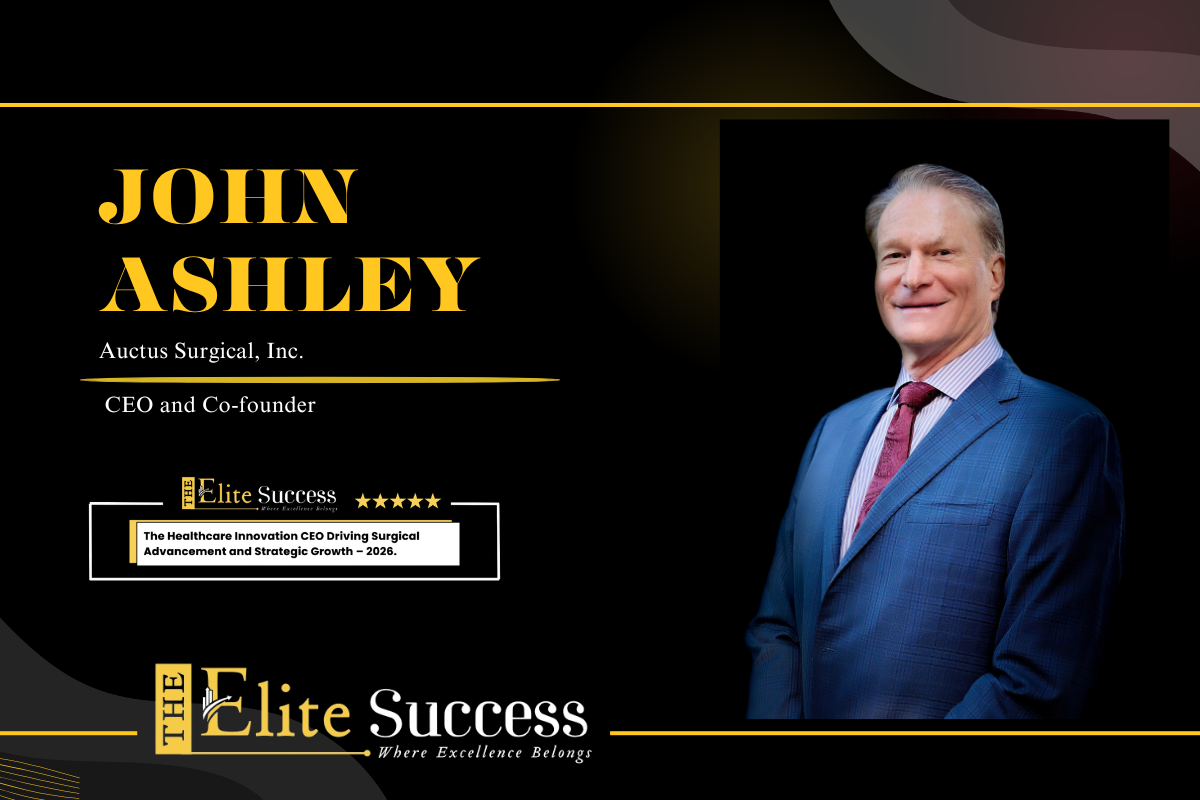
For John Ashley, CEO and Co-founder of Auctus Surgical Inc., this reality became impossible to ignore after witnessing the experience of a colleague’s daughter who had to give up ballet and competitive soccer following traditional treatment. It was a moment that transformed perspective into purpose.
“Success is not final, failure is not fatal: it is the courage to continue that counts.” That belief poignantly stated by Winston Churchill has guided John through more than three decades in medical technology, shaping a career defined by persistence and meaningful innovation.
Recognizing his impact, The Elite Success magazine features John Ashley in its 2026 edition, “The Healthcare Innovation CEO Driving Surgical Advancement and Strategic Growth—2026.” Today, through Auctus Surgical Inc., he continues to challenge long-standing approaches to scoliosis care—working to ensure that treatment not only corrects the spine, but preserves the life built around it.
A Company Built on Purpose
Auctus Surgical Inc. was established with a clear and deliberate vision to transform the way scoliosis is treated. The company united a seasoned medical device management team with nearly 90 years of combined experience and three pediatric spine surgeons. This collaboration ensured that innovation remained closely aligned with real clinical challenges and patient needs.
The company set out to create an alternative to traditional scoliosis treatment that avoids spinal fusion. For decades, fusion surgery has remained the standard solution. While effective in correcting spinal curvature, it restricts mobility and can alter a patient’s quality of life over the long term.
In response to these limitations, Auctus Surgical introduced the Dynamic Tethering System. This solution offers a minimally invasive technique that uses implants inserted through small incisions of approximately one centimeter. The approach reduces surgical impact and supports quicker recovery compared to conventional methods.
The system stands apart because it preserves natural spinal motion. It also adapts as the patient grows, which is critical in treating children with scoliosis. Physicians can adjust the system non-invasively over time, allowing the treatment to evolve with the patient’s development rather than remain fixed.
This innovation represents a meaningful shift in medical thinking. Instead of forcing the spine into a rigid structure, the technology works in harmony with the body. It supports flexibility, encourages personalization, and prioritizes long-term function, offering patients a more balanced and progressive path to treatment.
The Reality of Building in MedTech and Progress with Patience
Building a company in the medical technology space demands resilience, precision, and long-term commitment. John identifies funding as the most persistent challenge. The sector requires significant upfront capital, extended development timelines, and rigorous clinical validation before any solution reaches patients. These realities create barriers for early-stage ventures, especially those that challenge established standards of care.
Auctus Surgical addressed this challenge with clarity and discipline. The team focused on investors who understood the clinical problem and its real-world impact. They cultivated relationships with spine surgeons, physicians in related specialties such as orthopedic radiology, experienced medical device executives, and healthcare-focused angel networks like Mid Atlantic Bio Angels. This approach strengthened credibility and created a foundation of trust early in the journey. The company did not chase capital in isolation. It selected partners who shared conviction in the mission. These investors contributed strategic insight, operational experience, and sustained commitment alongside financial support.
John emphasizes alignment as a critical factor in building a healthcare venture. He believes progress accelerates when stakeholders operate with a unified vision. This includes surgeons, clinical experts, specialized investor groups, and family offices with a direct connection to the condition. Shared purpose enables better decision-making and keeps the organization focused on meaningful outcomes.
He maintains a disciplined perspective on growth. John does not define success through early recognition alone. Auctus Surgical earned industry attention when its Dynamic Tethering System received the Best New Spine Technology of the Year award in 2020 from Orthopedics This Week. He remains focused on broader impact. He measures success through adoption at scale and tangible improvements in patient outcomes.
Experience as a Strategic Advantage
Experience drives Auctus Surgical’s ability to push boundaries in surgical innovation. The company builds its strength on two defining advantages that shape both its strategy and execution.
The leadership team brings deep operational and entrepreneurial expertise. The founders have achieved eight successful startup exits, including two initial public offerings, and have generated 1.75 billion dollars in investor value. This track record reflects more than financial success. It demonstrates disciplined decision-making, sharp market insight, and the ability to build and scale companies in highly competitive environments. The team applies this knowledge directly to product development, commercialization, and growth. They anticipate challenges early, act decisively, and maintain focus on long-term value creation.
Equally important, practicing pediatric spine surgeons play a central role within the founding team. Their presence ensures that innovation stays grounded in clinical reality. These surgeons bring firsthand experience with the limitations of traditional treatments and the unmet needs of patients. They guide design decisions, refine product functionality, and validate outcomes through a practical lens. This close alignment between engineering and clinical insight strengthens the relevance and effectiveness of every solution.
Together, these two factors create a powerful foundation. Experience provides strategic clarity and execution discipline, while clinical involvement ensures meaningful impact. Auctus Surgical continues to translate this combination into solutions that address real challenges and improve patient care with precision and purpose.
Transforming the Standard of Care
Auctus Surgical is redefining how clinicians approach scoliosis treatment by challenging a long-established standard. Spinal fusion surgery has long served as the primary solution, yet it requires large incisions, extended hospitalization, and demanding recovery timelines. It also limits spinal mobility, which changes how patients move for the rest of their lives.
These limitations create significant consequences, particularly for children and adolescents. Many young patients must give up sports, dance, and other physical activities that shape their lifestyle and identity. The procedure addresses spinal curvature, but it often reduces the overall quality of life.
The Dynamic Tethering System introduces a more progressive and patient-focused approach. Patients experience shorter hospital stays and faster recovery, allowing them to return to school or work with minimal interruption. They continue participating in physical activities while their spine gradually corrects over time. This approach supports both physical health and emotional well-being.
Surgeons gain a higher degree of precision and flexibility with this technology. They can adjust the system as the patient grows, ensuring that treatment evolves alongside the individual. This adaptability allows clinicians to deliver care that aligns closely with each patient’s anatomy and development.
By preserving motion and enabling personalization, Auctus Surgical sets a new benchmark in scoliosis care and creates a future where treatment supports both correction and quality of life.
Sustaining Innovation Through Perspective and Collaboration
Staying competitive in the medical technology sector requires constant adaptation and a clear understanding of clinical realities. John places strong emphasis on building close relationships with caregivers such as doctors, nurses, and physical therapists. These professionals work directly with patients every day, so they offer insights that no data set can fully capture. Their feedback helps the company align its efforts with real patient needs and current treatment practices. Regular interaction with caregivers keeps innovation practical and focused on solving genuine clinical challenges.
Alongside these relationships, Auctus Surgical tracks developments across the broader industry. The team studies new tools, reviews emerging technologies, and works with vendors who enable fast and efficient development. This approach supports quick iteration without compromising precision. The company moves forward with agility while maintaining strict standards for safety and quality. Every decision reflects a commitment to reliability, since patient outcomes depend on consistency and trust.
John also views diversity as a critical driver of innovation. He believes strong ideas emerge when people with different perspectives contribute to the same problem. A diverse team brings varied experiences that lead to better design choices and more effective solutions. This mindset strengthens the company’s ability to serve a wide range of patients with different needs.
Collaboration remains central to this philosophy. Medical specialists work closely with professionals from other disciplines to refine each solution. The team keeps both the patient and the surgeon at the center of every decision. This focus ensures that each innovation delivers practical value in real clinical settings while supporting better outcomes for everyone involved.
Leadership That Builds Strong Teams
John builds his leadership approach on a simple idea that people deliver their best work when they receive strong support and real autonomy. He invests in structured training, dependable tools, and clear guidance so teams can operate with clarity from the start. Alongside this foundation, he expects individuals to take ownership of their roles and make decisions with confidence. This balance between support and accountability shapes how his teams function each day.
His perspective draws from years of entrepreneurial experience, where he has seen how culture directly influences outcomes. He treats culture as an active priority rather than an abstract concept. He focuses on building a collaborative environment where people communicate openly, solve problems together, and stay aligned with shared goals. He pays close attention to hiring decisions because the right people strengthen momentum, while the wrong fit can disrupt progress. He reinforces this effort through a thoughtful onboarding process that helps new team members integrate smoothly and understand expectations early.
John recognizes that growth introduces complexity and tests cultural consistency. He addresses this by putting clear systems in place and reinforcing values through everyday actions. He stays engaged with his teams and ensures that leadership remains consistent across levels. He believes that sustained progress depends on more than innovation or strategy alone. He sees real advancement in the strength of the team, the clarity of its direction, and the confidence individuals bring to their work.
Purpose Driven Innovation and Trust-Based Leadership
John’s approach to leadership and innovation reflects a strong foundation shaped by his education and professional values. His academic journey instilled curiosity and a disciplined way of thinking, encouraging him to question existing systems and look for better solutions. He learned early that innovation must serve a purpose. It should address real needs and create meaningful improvement rather than exist for novelty.
This perspective carries into how he builds and leads his organization. In the medtech space, trust is critical, and John treats it as a core principle rather than an outcome. He emphasizes integrity, persistence, and clear communication in every aspect of his work. Within his team, he promotes openness and ensures that information flows freely across all levels. He does not allow knowledge to remain isolated or restricted.
This culture of transparency strengthens collaboration and keeps everyone aligned with shared goals and challenges. It also creates an environment where ideas can develop with clarity and purpose. By combining a thoughtful approach to innovation with a deep commitment to trust, John has shaped both his leadership style and the way his organization operates.
A Vision for Lasting Impact and Advice for Future Innovators
Looking ahead, John holds a clear and grounded vision. He aims to build a legacy defined by meaningful impact on hundreds of thousands of patients. This ambition reflects a deeper purpose that goes beyond refining procedures or introducing new devices. At its core, his work focuses on improving lives at scale and delivering outcomes that truly matter in healthcare.
For those entering the healthcare space, his advice follows the same disciplined mindset. He emphasizes the importance of identifying a genuine unmet need and keeping the entire team aligned with that mission. Strong communication plays a critical role, as it helps teams stay focused and solve complex challenges together. He also believes in recognizing collective effort rather than individual success, since innovation in this field depends on collaboration.
John encourages innovators to seek guidance from experienced mentors who understand both the technical and practical realities of the industry. Their insights can help avoid costly mistakes and provide clarity during uncertain phases.
Together, this vision and advice reflect a balanced approach. It combines ambition with execution and purpose with practicality, which is essential for building lasting impact in healthcare.
A Legacy of Innovation in Scoliosis Care
John’s work with Auctus Surgical Inc. marks a meaningful advancement in the evolution of scoliosis treatment. By challenging long-established methods and introducing a more dynamic, patient-centered approach, he is helping reshape expectations in spinal care. Rather than relying solely on traditional solutions, his efforts focus on improving outcomes while preserving quality of life, reflecting a deeper understanding of patient needs.
His journey highlights the importance of experience, collaboration, and purpose-driven leadership. With decades of insight in medical device development and close partnerships with specialized surgeons, John has demonstrated that innovation is not just about creating new technology, but about applying it thoughtfully to solve real-world problems. This balanced approach ensures that progress remains both practical and impactful.
As Auctus Surgical continues to expand its reach, its influence is likely to extend beyond individual treatments. The company’s work has the potential to redefine standards in scoliosis care, offering patients more effective and less invasive options. In doing so, it sets a new benchmark for the industry, reinforcing the idea that meaningful innovation can transform not only procedures but the entire patient experience.
John Ashley’s Blueprint for Leadership and Meaningful Impact
1. Purpose Driven Innovation
John Ashley builds innovation around real human impact. A personal experience shaped his mission to improve scoliosis care, ensuring that every solution addresses genuine patient needs while enhancing quality of life.
2. Challenging Conventional Treatment
He questions the long-standing reliance on spinal fusion and introduces alternatives that preserve mobility. His work demonstrates that progress in healthcare often begins by rethinking established methods.
3. Clinical Insight as a Foundation
Close collaboration with pediatric spine surgeons keeps innovation grounded in reality. This alignment ensures that product design, functionality, and outcomes reflect actual clinical challenges.
4. Redefining Patient Experience
His approach goes beyond correcting the spine. By enabling movement and flexibility, he ensures that treatment supports a patient’s lifestyle, identity, and emotional well-being.
5. Alignment Drives Sustainable Growth
John emphasizes the importance of working with investors and stakeholders who share the same vision. This strategic alignment strengthens decision-making and supports long-term success in a complex industry.
6. Culture as a Competitive Advantage
He builds teams through strong support systems, clear communication, and accountability. This culture fosters collaboration and empowers individuals to perform at a high level, driving consistent innovation.