
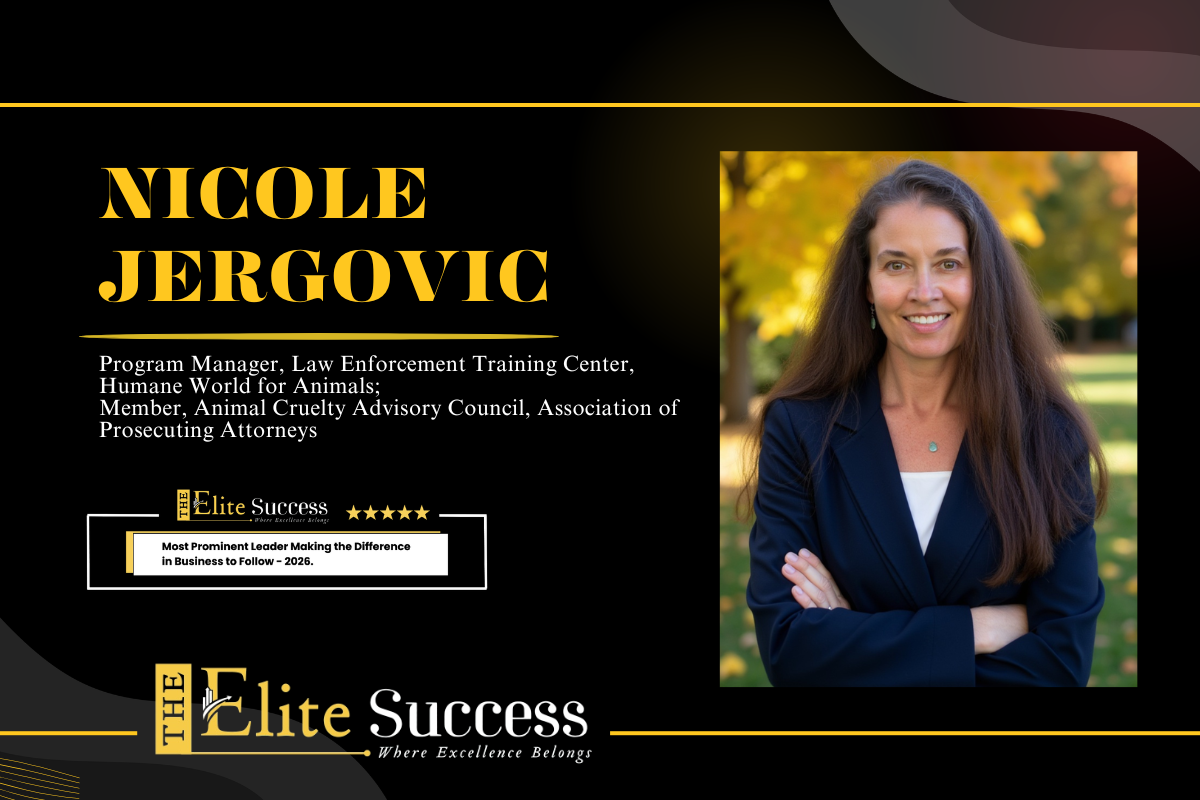
For more than twenty-five years, Nicole Jergovic worked inside the justice system as a prosecuting attorney, handling complex cases that demanded careful evidence analysis, disciplined preparation, and an unwavering commitment to the rule of law. Over the course of her career, one pattern became increasingly clear: animal cruelty cases rarely existed in isolation. Again and again, they intersected with domestic violence, organized crime, narcotics investigations, and broader threats to community safety.
Those experiences shaped her understanding of how these cases fit into the larger criminal justice landscape. When investigators and prosecutors approach animal cruelty cases with the same legal rigor applied to other serious offenses, the results can strengthen both public safety and confidence in the justice system.
Today, Jergovic works to advance those standards nationwide. As Program Manager for Law Enforcement Training at Humane World for Animals and a member of the Animal Cruelty Advisory Council, she collaborates with investigators, prosecutors, and justice professionals across the country to strengthen investigative practices, promote interagency coordination, and ensure that cruelty cases are investigated and prosecuted with the legal precision they deserve.

Strengthening Systems, Not Just Cases
Nicole Jergovic’s career reflects a steady progression from courtroom advocacy to national-level leadership in animal protection enforcement.
For more than twenty-five years, she served as a prosecuting attorney, where preparation, precision, and the impartial application of the law were daily requirements. Each case demanded careful analysis of facts, statutory elements, and evidentiary standards.
Over the years, Nicole handled cases that revealed how closely animal cruelty can be connected to other forms of violence. In many investigations, evidence of abuse toward animals appeared alongside domestic violence, illegal gambling operations tied to animal fighting, or other criminal conduct. Those experiences reinforced an important lesson: when investigators address animal cruelty thoroughly and lawfully, they often uncover broader patterns of harm affecting both animals and people.
While courtroom litigation provides accountability one case at a time, Nicole came to believe that strengthening investigative practices could produce broader systemic impact. That realization ultimately led her to transition from full-time prosecution into a leadership role with Humane World for Animals, where she now serves as Program Manager for Law Enforcement Training.
In this capacity, Nicole works at the national level to support law enforcement agencies in conducting thorough, legally sound investigations. Her work focuses on training officers, fostering collaboration between investigators and prosecutors, and promoting investigative practices that withstand legal scrutiny in court.
She also serves as a member of the Animal Cruelty Advisory Council, where she contributes strategic guidance on improving enforcement practices and strengthening case outcomes.
Nicole’s career reflects a deliberate shift in scale—from litigating individual cases to strengthening the systems that shape how those cases are investigated and prosecuted across the country. The mission remains grounded in accountability and public safety, but the impact now extends far beyond a single courtroom.

Where Prevention Meets Prosecution
At Humane World for Animals, the Law Enforcement Training Center operates with a clear mandate: strengthening the ability of law enforcement officers, prosecutors, and allied professionals to investigate and prosecute animal cruelty cases effectively and lawfully.
Animal cruelty rarely exists in isolation. It frequently intersects with family violence, organized crime, narcotics trafficking, public health concerns, and broader threats to community safety. Addressing these cases effectively requires a structured and legally sound response.
The Law Enforcement Training Center positions its work at the intersection of justice and prevention. By equipping investigators with the tools necessary to conduct thorough investigations and build prosecutable cases, the organization helps ensure that crimes involving animal cruelty are addressed with the seriousness they warrant.
Through nationwide training initiatives offered at no cost to agencies or attendees, the center provides instruction on legal standards, investigative techniques, evidence collection, case documentation, and courtroom preparation.
Every program emphasizes lawful procedure and strategic case development. Participants leave with practical tools to hold offenders accountable while ensuring that constitutional protections and due process remain central to every investigative action.
When investigators apply these principles consistently, they strengthen case outcomes, reinforce public trust, and help ensure that justice systems operate with integrity.

Building Courtroom-Ready Investigations
The Law Enforcement Training Center advances professional standards in animal cruelty investigations through rigorous, practice-driven education.
Its flagship course, Animal Cruelty and Animal Fighting Investigations, provides comprehensive instruction on statutory interpretation, evidence collection, warrant preparation, documentation standards, and courtroom testimony. Officers and investigators learn how to build cases that are legally sound from the earliest stages of an investigation through prosecution.
Advanced coursework expands this foundation. Specialized trainings address complex cruelty investigations, Fourth Amendment considerations, coordination of large-scale neglect responses, and investigative protocols for equine and agricultural settings. Additional programs explore the intersection of family violence and animal cruelty, as well as strategies for addressing encounters between police officers and dogs.
Each course emphasizes practical application grounded in current law. Instructors continually review appellate decisions and legislative developments to ensure that course materials reflect the most current legal standards. Ongoing engagement with prosecutors and law enforcement leaders across the country also informs curriculum development.
Technology helps expand access to these trainings, particularly for agencies in rural or underserved jurisdictions. While most programs are delivered in person to preserve interactive learning, the center also integrates webinars and digital resources that allow agencies to access training regardless of location.
Participants leave with practical materials and investigative tools that support their work long after the training concludes. The goal is to strengthen investigative consistency, improve case outcomes, and promote a national standard for cruelty investigations that is both effective and legally defensible.

Leading Through Institutional Complexity
Nicole approaches leadership with a clear understanding of the realities facing law enforcement agencies.
Early in her tenure, she recognized that building trust with investigators required demonstrating that the training program was grounded firmly in law rather than advocacy. Officers and prosecutors focus on evidentiary integrity, officer safety, and legal sufficiency. Nicole ensured that every training initiative reinforced those priorities.
Credibility, she believes, must be earned. She began by listening to the needs of agencies across the country. Each jurisdiction operates within its own legal framework, administrative structure, and resource constraints. Understanding those realities allowed her to tailor training programs that respected local authority while strengthening investigative practices.
Her leadership now unfolds in an environment shaped by evolving public expectations and limited institutional resources. Nicole approaches these challenges with steady discipline. She grounds decisions in measurable outcomes, statutory mandates, and established legal procedure rather than reacting to external pressure.
This balanced approach allows her to support decisive enforcement when evidence supports action while emphasizing restraint when due process requires it. By pairing urgency with careful legal analysis, she helps strengthen professional standards and reinforce trust across the justice system.

Influence Through Preparation and Professional Respect
Nicole defines leadership through preparation, clarity, and respect for professional expertise.
Her courtroom experience informs how she communicates with investigators and prosecutors. Rather than presenting training as outside guidance, she engages officers as experienced professionals whose knowledge and practical insight are essential to successful investigations.
By approaching training as a collaborative process, she helps agencies refine investigative strategies while preserving the autonomy and expertise of local investigators.
Nicole’s work focuses on translating complex legal principles into practical guidance that officers can apply in the field. Clear documentation practices, careful evidence collection, and early consultation with prosecutors can significantly strengthen the likelihood that cases will succeed in court.
Her influence comes not from volume but from substance. Through careful reasoning and practical instruction, she helps agencies build stronger investigations that meet the expectations of courts and prosecutors.

Mentorship and Professional Development
A key component of Nicole’s work involves mentoring investigators and supporting professional development within the field.
The Law Enforcement Training Center works with experienced investigators, prosecutors, and subject-matter experts who bring real-world experience into the classroom. This ensures that training reflects the practical realities officers encounter during investigations.
Nicole emphasizes structured learning environments where officers can ask questions, examine case studies, and develop investigative strategies grounded in law and evidence.
She also recognizes that effective investigations depend on communication and community relationships. Officers who understand the communities they serve often gather stronger evidence and build greater public trust. Integrating these perspectives into training strengthens investigative outcomes without compromising legal standards.
Accountability remains central to the program’s success. Nicole evaluates training effectiveness through participant engagement, jurisdictional reach, and the extent to which agencies adopt improved investigative practices after training concludes.

Preparing the Next Generation of Justice Practitioners
Looking ahead, Nicole remains focused on strengthening the national framework supporting animal cruelty enforcement.
The legal landscape continues to evolve through legislative reform, judicial interpretation, and emerging investigative challenges. Ensuring that investigators and prosecutors have access to current legal guidance remains essential.
Nicole believes the most meaningful measure of success lies in long-term institutional impact. If future investigators approach cruelty cases with stronger evidence collection practices, clearer legal analysis, and greater collaboration with prosecutors, then the training programs she helps lead will have achieved their purpose.
Her work ultimately centers on reinforcing the principles that sustain the justice system: fairness, preparation, and disciplined respect for the rule of law.

A Legacy of Professional Standards
Nicole Jergovic’s professional legacy lies in strengthening investigative standards within animal cruelty enforcement.
By aligning training programs with constitutional safeguards, evidentiary precision, and prosecutorial expectations, she has helped ensure that cruelty investigations receive the same professional attention and legal rigor expected in other serious criminal cases.
Through collaboration with law enforcement agencies across the country, she continues to support investigators and prosecutors who are committed to conducting thorough, lawful, and effective investigations.
For Nicole, the ultimate measure of success is not recognition but results—stronger investigations, better-prepared prosecutors, and justice systems that operate with professionalism, fairness, and integrity.