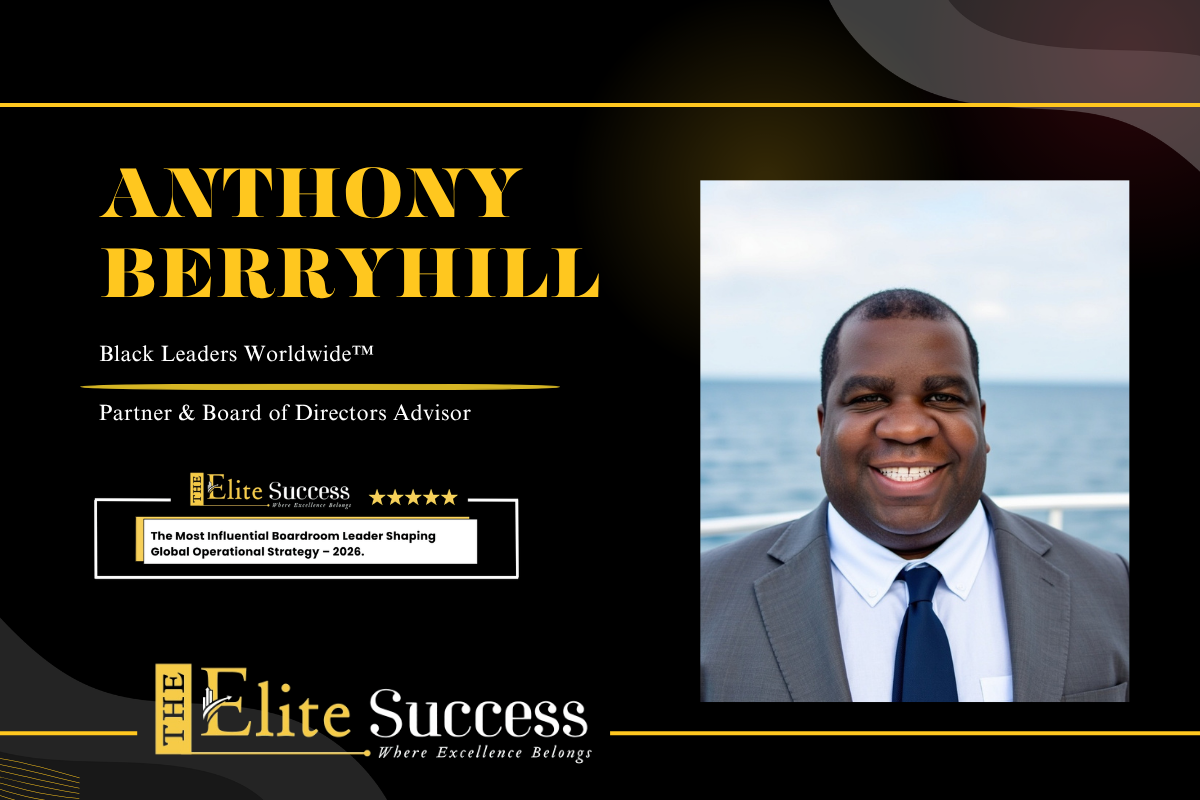
Anthony Berryhill: Building Adaptive Organizations for the Next Workforce
Generation
What does effective leadership look like in a time when organizations are being reshaped by
rapid technological change, shifting workforce expectations, and rising demands for
transparency and accountability?
Across industries, leaders are dealing with a shared set of pressures. Governance structures
that were built for stability are often struggling to keep pace with change, while operational
systems are being tested by complexity at scale. At the same time, organizations are expected
to remain responsive to a workforce that values agility, purpose, and inclusion. In this
context, leadership based solely on hierarchy and control is increasingly limited in its
effectiveness, creating a clear need for approaches that are more adaptive and systems-
oriented—capable of linking strategy with execution and addressing structural challenges
directly.
Within this context, Anthony Berryhill, Partner at Black Leaders Worldwide™,
represents this style of leadership, with experience spanning governance insight, operational
strategy, and a focus on ethical, systems-driven transformation across organizations.
For his contributions to governance thinking, operational excellence, and leadership-driven
transformation, he is being featured as “The Most Influential Boardroom Leader Shaping
Global Operational Strategy – 2026” by The Elite Success Magazine.
Building a Career Across Governance, Education, and Strategy
Anthony built his professional journey through a rare combination of academic depth,
operational strategy, governance advisory, and educational leadership. From the beginning of
his career, he pursued disciplines that strengthened his ability to solve complex institutional
and organizational challenges. His undergraduate studies at Stanford University and his
doctoral work at Yale University shaped his approach toward analytical thinking, research
methodology, systems design, and long-term institutional development. These experiences
created the intellectual foundation that continues to guide his work today.
During his time at Yale University, Anthony encountered one of the defining moments of his
leadership journey. While serving as a teaching assistant for one of the university’s largest
courses, he identified major inefficiencies within the undergraduate course registration and
discussion section allocation process. Rather than accepting the limitations of an outdated
system, he applied his knowledge of cloud architecture, user experience design, and
operational problem-solving to help redesign Yale’s undergraduate course selection system.
That experience reinforced his belief that strong leadership requires independent thinking,
practical execution, and the willingness to improve even the most established institutions.
As his career evolved, Anthony expanded his expertise across finance, governance strategy,
HR technology management, educational consulting, and organizational transformation. His
work with organizations such as PIMCO and GLG strengthened his understanding of
operational excellence, fiduciary responsibility, and strategic decision-making. He
consistently positioned himself as an advisor who challenged assumptions, identified
structural weaknesses, and focused on long-term organizational sustainability.
Beyond corporate advisory work, Anthony also built an accomplished career as a national-
level debate coach, teacher, and education entrepreneur. Over more than two decades, he
refined his communication skills, strengthened his critical thinking, and developed a
leadership style grounded in ethics, clarity, and operational discipline. Today, as Partner at
Black Leaders Worldwide™, he continues to bring together governance insight, educational
expertise, and transformational leadership across every aspect of his professional journey.
Operating at the Intersection of Governance and Social Impact
Anthony serves as Partner at Black Leaders Worldwide™ and contributes to several
nonprofit advisory boards focused on social impact, education, and community advancement.
He advises Progressive Power, an advocacy organization that supports leaders across party
lines who prioritize the well-being of everyday citizens and strengthen Main Street
communities.
He also serves the Women’s Foundation of North Carolina, an organization that works to
expand educational access and provide resources for underserved youth.
Across these roles, he applies expertise in governance, operational strategy, organizational
transformation, inclusion frameworks, and long-term leadership planning. He focuses on
improving institutional effectiveness and aligning execution with social responsibility and
fiduciary accountability.
He also pursues corporate advisory opportunities across global environments where he
supports talent development, organizational culture, and leadership transformation. His work
reflects a consistent commitment to strengthening leadership capacity, building resilient
institutions, and advancing equitable outcomes across both nonprofit and corporate sectors
while maintaining a strong focus on ethical decision-making and long-term impact.
Bridging Leadership Intent with Executional Reality
As a Partner, Non-Executive Advisor, and Global Operating Strategist, Anthony works with
organizations to enhance operational systems, governance frameworks, leadership
communication, and workforce strategy. His role spans multiple layers of performance in
environments where structural complexity, cultural misalignment, or leadership gaps create
inefficiencies hindering execution and growth.
A key area of his expertise lies in multi-generational workforce dynamics, navigating the
expectations and behaviors of Millennials, Gen Z, and emerging Gen Alpha employees. With
two decades of experience as a teacher, learning and development professional, and debate
coach, he supports organizations in shaping leadership approaches that are relevant, adaptive,
and aligned with workforce realities.
He places emphasis on inclusive operational design, drawing inspiration from user experience
principles. His perspective: operational excellence breaks down systems that are designed for
executive convenience without reflecting the frontline employees who execute them daily.
His governance philosophy prioritizes usability, communication clarity, accessibility, and
practical execution across organizational levels.
Another major component of his work involves influence and persuasion strategy. He
partners with leadership teams to refine both employee and customer value propositions,
ensuring that organizational messaging reflects stakeholder concerns, expectations, and real-
world experiences. This audience-centric methodology was reflected in his work at PIMCO,
where he supported a return-to-office communication strategy structured around employee
sentiment rather than executive-level language.
His broader responsibilities include operational diagnostics, fiduciary oversight, governance
evaluation, transformation planning, leadership advisory, cultural assessment, and data-
informed decision support. Across all engagements, his focus is on enabling organizations to
move beyond symbolic leadership toward measurable, sustained operational and cultural
outcomes overall
Confronting Structural Resistance in Institutional Environments
One challenge Anthony faced in high-level advisory and governance roles was the lack of
formal onboarding structures. Executive environments assume immediate contribution
without orientation frameworks or procedural guidance. He had to build structure, clarify
expectations, and map organizational context to function effectively within complex
leadership systems.
An ongoing challenge has been navigating entrenched organizational politics and toxic
institutional cultures. In academia, HR finance, he worked in environments where short-term
political incentives override operational integrity and long-term institutional health.
Addressing carried risk, including stalled advancement, withheld incentives, and resistance
from leadership unwilling to confront inefficiency.
He has been openly critical of performative DEI initiatives, especially in large technology
organizations. Institutions adopted DEI frameworks without rigorous scholarship, validated
methodology, or measurable design to programs emphasizing visibility over data-driven
outcomes.
Another key challenge is the accelerating pace of organizational and technological change.
Leadership teams acknowledge volatility, underprepared structural shifts, driven by
automation, artificial intelligence, workforce transformation, and evolving employee
expectations. Organizations often respond reactively to disruption rather than building
anticipatory systems that adapt proactively.
Another challenge is groupthink in executive environments. The obligation to dissent
emphasizes that organizations become fragile when conformity overrides critical reasoning.
Sustainable innovation depends on cultures that encourage disagreement, rigor, and
independent perspective.
Operational Discipline as the Foundation of Leadership
Anthony’s leadership philosophy is grounded in operational discipline, intellectual honesty,
inclusion, and fiduciary courage. He argues that organizations perform best when visionary
thinking is tightly aligned with executional rigor, and when leaders confront inconvenient
truths rather than preserve internal comfort or consensus.
Operational discipline is treated as a core capability, a foundational muscle that must be
continuously strengthened. Without robust systems, clear processes, and disciplined
execution, organizations accumulate technical debt, cultural misalignment, and inefficiencies
that limit innovation and sustainable growth. He also notes that operational strength must be
balanced with visionary leadership able to anticipate disruption and emerging opportunity.
His governance philosophy emphasizes truth-telling. He believes advisors and board
members must challenge assumptions, surface uncomfortable realities, and avoid reinforcing
internal politics. Fiduciary responsibility, in his view, requires active challenge, long-term
risk awareness, and prioritizing sustainability over short-term approval.
Inclusion is a central operational requirement rather than a symbolic initiative. He argues that
systems must account for diverse employee experiences, socioeconomic contexts, and
accessibility needs; they remain structurally incomplete and less effective. He also frames
leadership as a practiced discipline defined by accountability, ethical decision-making,
communication clarity, and consistency under pressure, anchored in long-term sustainability
and ethics-driven governance.
Across engagements, his philosophy consistently prioritizes disciplined execution, ethical
clarity, and sustainable organizational performance over short-term gains and decision
outcomes.
Building Independent Thinkers Through Structured Mentorship
Anthony’s background as an educator, debate coach, and learning and development
professional has shaped his approach to leadership and mentorship. With over two decades of
experience working with students, early-career professionals, and emerging leaders, he has
built a nuanced understanding of communication dynamics, motivation structures, and talent
development across generational cohorts in diverse environments.
His mentorship philosophy emphasizes empowerment over dependency. He frames his role
like a driving instructor, offering guidance, structure, and feedback while ensuring
individuals retain ownership of their growth. He believes leadership is not about directing
actions but about cultivating critical thinking, sound decision-making, and independent
operation in complex professional environments. This defines his leadership approach.
Communication is central to his methodology. Drawing on debate coaching, he applies
“verbal frequency” and “verbal judo” to adjust tone, framing, and argumentation for different
audiences and high-pressure contexts. This enables him to manage difficult conversations,
challenge assumptions, and translate complex strategy into clear, actionable insights in
boardroom executive settings across organizational leadership and governance environments.
Within organizations, Anthony advocates learning cultures that normalize dissent,
experimentation, and openness. He argues innovation is constrained when employees
conform or stay silent to preserve harmony. He promotes evaluating ideas on merit, treating
disagreement as input to decision-making, emphasizing workforce readiness, Gen Alpha
expectations around authenticity, flexibility, inclusion, and ethical leadership, shaping
workplace standards, evolving ecosystems.
Recognized Contributions to Equity and Institutional Reform
Throughout his career, Anthony has contributed to a diverse range of operational,
governance, educational, and organizational initiatives, demonstrating a consistent ability to
address complex structural challenges across multiple industries.
One of his earliest notable achievements was his contribution to the redesign of Yale
University’s undergraduate course registration and student management systems during his
doctoral studies. By integrating operational analysis, cloud architecture principles, and user
experience design thinking, he helped improve a system that directly impacted large student
populations while also streamlining critical administrative workflows.
A further significant accomplishment came during his tenure at PIMCO, where he supported
the development of a return-to-office communication strategy during a period of significant
workforce uncertainty. Despite limited resources and without a formal marketing
background, he applied his expertise in generational workforce behavior and employee-
centered communication to craft messaging that contributed to a measurable reduction in
projected attrition risk.
Anthony is also recognized for his ability to diagnose operational inefficiencies and cultural
dysfunctions that are often overlooked by conventional consulting frameworks. His
interdisciplinary experience spanning academia, governance, HR, operational strategy, and
educational leadership enables him to surface actionable insights in environments where even
large-scale consulting interventions struggle to deliver sustained impact.
In addition to his project-based contributions, he has been formally recognized as a “Global
Equity Champion for Learning and Social Mobility,” reflecting his sustained commitment to
expanding equitable access, inclusion, and systemic reform across both educational and
corporate ecosystems. He is also a Fellow of the Royal Society of Arts (FRSA), underscoring
his alignment with institutional excellence combined with practical, execution-focused
leadership across domains.
Preparing Organizations for Next-Generation Workforce Shifts
Looking ahead, Anthony plans to expand his impact as a global operating advisor and
governance strategist by partnering with organizations willing to engage directly with
complex operational, cultural, and workforce challenges in a transparent and proactive
manner.
A key focus of his future work is supporting long-term workforce transformation as Gen
Alpha enters professional environments with new expectations around inclusion, leadership
transparency, workplace ethics, and career sustainability. He believes many organizations are
underprepared for these shifts and aims to help leadership teams evolve structures, policies,
and communication models before such changes become systemic risks to talent and
retention.
He also intends to continue advocating for greater accessibility, fairness, and transparency
within executive leadership and board advisory ecosystems. Many recruitment pathways
remain opaque and biased, limiting access for capable professionals outside traditional
archetypes. He is committed to broadening these pathways and strengthening merit-based
governance access.
In addition, he plans to expand advisory work across multiple sectors, strengthening
governance and resilience.
Long-Term Thinking as a Leadership Imperative
Anthony’s advice to aspiring board members and operating advisors is grounded in
intellectual honesty, courage, and long-term strategic thinking. He maintains that professional
credibility is not built through conformity or alignment with prevailing opinions, but through
the disciplined willingness to articulate uncomfortable truths that others may avoid.
He emphasizes that advisors and board members must consistently prioritize fiduciary
responsibility over personal popularity or political convenience. In his view, organizations
derive little value from governance professionals who merely reinforce existing assumptions
or preserve dysfunctional systems. Effective governance, instead, requires individuals who
are prepared to interrogate decisions, surface latent risks, and advocate for corrective action
even when it introduces internal friction.
Anthony also encourages emerging leaders to avoid becoming constrained by short-term
organizational thinking. While quarterly performance pressures and immediate operational
demands are unavoidable, he argues that strong governance requires a parallel focus on long-
term implications—particularly those related to operational resilience, cultural stability, and
workforce evolution.
In addition, he advises future leaders to remain firmly committed to ethics and inclusion,
even when such commitments create professional or institutional resistance. Based on his
experience, meaningful organizational improvement often depends on confronting entrenched
cultural dysfunction, challenging performative leadership practices, and maintaining integrity
in environments that may prioritize approval over accountability.
Ultimately, he believes the most effective advisors are those who combine strategic
intelligence with moral clarity, ensuring that decision-making is not only analytically sound
but also ethically grounded and structurally responsible over the long term.
A Legacy Rooted in Ethics, Accountability, and Access
Anthony hopes to leave a legacy defined by ethical governance, operational transformation,
accessibility, and the democratization of leadership. He seeks to reinforce the idea that
leadership is not determined by race, wealth, academic pedigree, or social background, but by
behavior, accountability, and the quality of decision-making consistently demonstrated over
time.
A core element of his long-term vision is addressing the structural gatekeeping that continues
to shape executive leadership and board advisory ecosystems. He believes many governance
structures remain exclusionary and disproportionately influenced by access to elite networks
and traditional institutional pathways, thereby limiting opportunities for highly capable
individuals who operate outside these systems.
Through his work, Anthony aims to demonstrate that operational excellence and inclusion are
not competing priorities, but mutually reinforcing drivers of sustainable organizational
performance. He encourages future leaders to build governance frameworks that prioritize
transparency, constructive dissent, accessibility, and long-term thinking over performative
alignment or short-term optics.
Ultimately, he aspires to empower the next generation of leaders to question entrenched
systems, articulate difficult truths, and approach leadership as a responsibility rooted in
ethics, accountability, and genuine stewardship of organizations and the people within them.