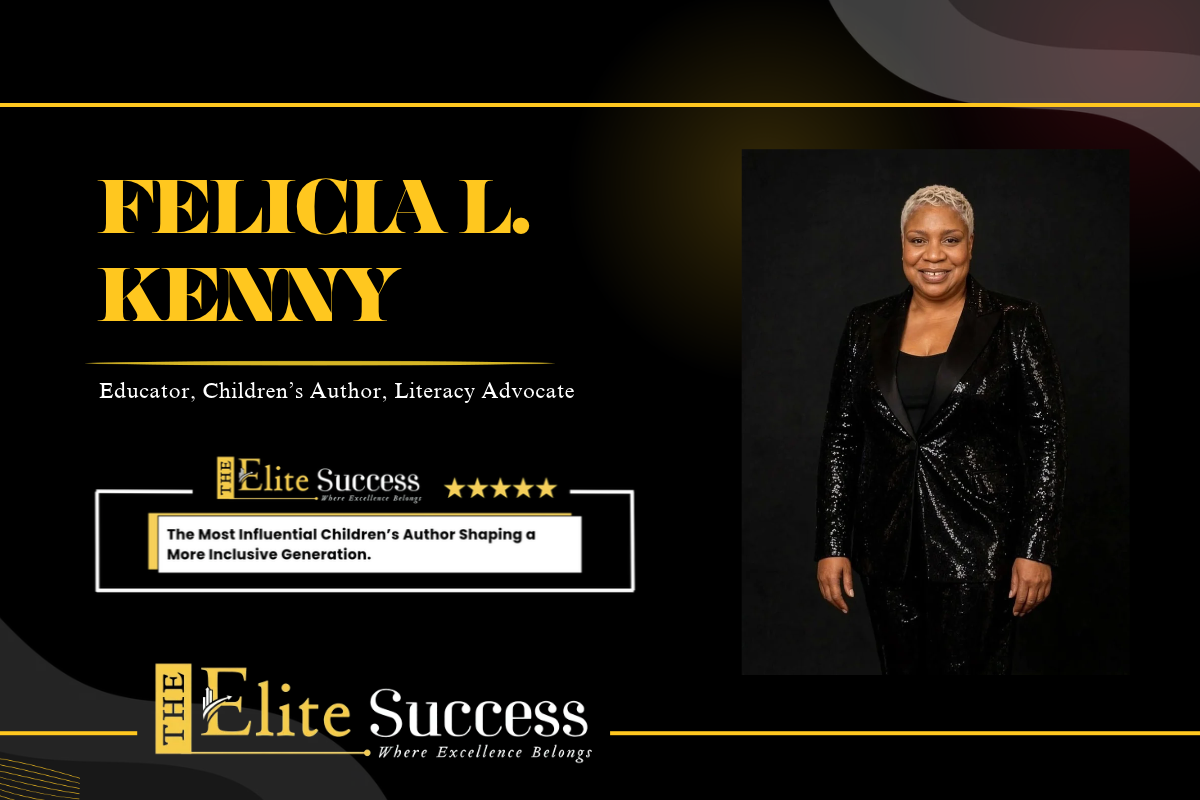
Felicia L. Kenny: Turning Stories into a Powerful Voice for Every Child
Through literature, education, and a commitment to inclusion, Felicia L. Kenny is helping children discover the value of their identities while encouraging families and educators to see beyond labels, assumptions, and differences.
What happens when a child looks at their own reflection and struggles to understand where they belong? What happens when a classroom celebrates achievement but overlooks the many ways children learn, communicate, and experience the world? Sometimes, the answer begins with something remarkably simple: a story that tells a child they matter.
For Felicia L. Kenny, these questions are more than abstract concerns. They are at the heart of her work as an author, special education teacher, and literacy advocate. Through her writing and educational experience, she is building a body of work that encourages children to embrace their identities, appreciate others, and recognize that their potential cannot be measured by a single characteristic or expectation.
Her mission is rooted in a belief that deserves far more attention than it often receives: every child should have the opportunity to feel seen, accepted, and valued without having to hide the parts of themselves that make them different.
The idea may sound straightforward, yet putting it into practice requires patience, understanding, and a willingness to question established assumptions. Kenny approaches that challenge through stories that open conversations about biracial identity, autism, self-acceptance, and belonging. Her work also extends beyond identity-centered picture books into imaginative projects that explore different genres, characters, and perspectives.
Rather than treating literature as a collection of words intended simply to entertain, she sees it as an opportunity to create understanding. A book can give a child language for an experience they have struggled to explain. It can help a parent approach a sensitive conversation or encourage a teacher to reconsider an assumption. Most importantly, it can remind a young reader that their story deserves to be told.
The Personal Moments Behind a Larger Purpose
Kenny’s journey as a children’s author is closely connected to her experiences as a mother and educator. Her books emerge from a recognition that children often understand complicated questions through simple observations, even when adults struggle to find the right language to discuss them.
One such moment became the inspiration for Two Worlds, One Family: A Child’s Perspective on Being Biracial. When her daughter was approximately seven or eight years old, she made an innocent observation about her family’s racial differences: “daddy is white, mommy is brown, and I’m beige”.
The words stayed with Kenny. What might have appeared to be an ordinary childhood remark revealed an opportunity to explore how children understand identity in their own terms. Instead of approaching the subject exclusively through an adult’s interpretation, Kenny recognized the importance of preserving the child’s perspective.
That moment eventually became the foundation for a story intended to help children from different racial and ethnic backgrounds understand that they do not need to choose between the different parts of their heritage.
For Kenny, the experience reinforced the value of listening carefully to children. Their observations can reveal questions that deserve thoughtful answers, while their language can offer a natural starting point for conversations adults might otherwise find difficult to initiate.
Her professional experience in education has strengthened this understanding. Working with children who possess different abilities, personalities, interests, and learning needs has shown her that no single definition of intelligence, communication, or achievement can adequately describe every child.
This perspective informs both her writing and her approach to teaching. She wants children to encounter characters who encourage curiosity rather than judgment, while helping adults recognize that meaningful inclusion involves more than allowing someone to participate. It means creating conditions in which children can contribute, receive appropriate support, develop confidence, and feel respected.
The connection between her personal experiences and professional responsibilities gives her writing its central purpose: to make room for children whose identities or experiences may not always be adequately represented in the stories around them.
Two Worlds, One Family: Finding Wholeness in Identity
In Two Worlds, One Family, Kenny explores biracial identity through the eyes of Jory, an eight-year-old girl whose father is white and whose mother is Black. The story reflects a reality experienced by many children whose family backgrounds encompass more than one racial or cultural heritage.
For such children, questions about identity can sometimes become complicated by other people’s expectations. They may encounter assumptions about what they should look like, which culture they should identify with, or where they should feel they belong. Kenny’s story offers a different perspective: a child can embrace multiple backgrounds without being divided between them.
Jory’s experience invites young readers to understand that identity does not have to fit into someone else’s narrow definition. A child’s heritage belongs to their personal story, and they deserve the freedom to explore its different dimensions without feeling pressured to reject one part of themselves.
The book also reaches beyond its immediate audience. Children who do not share Jory’s background can connect with the emotions underlying her experience. The desire to belong, to understand one’s family, and to be accepted by others is not limited to any particular racial or cultural group.
By creating this connection, Kenny encourages readers to approach unfamiliar experiences with curiosity instead of judgment. A story can introduce children to different family structures and cultural backgrounds while reminding them that shared feelings often connect people across differences.
The book’s value therefore lies not only in representation but also in the conversations it can encourage. Parents and educators can use its themes to discuss heritage, identity, family, and belonging in ways that feel accessible to young readers.
Kenny hopes children will recognize themselves in its pages while developing a greater appreciation for the lives of others. Neither outcome requires a child to have all the answers. It requires an environment in which questions can be asked openly and differences can be discussed respectfully.
Celebrating the Whole Child Through I AM Me
If Two Worlds, One Family explores the connection between heritage and identity, I AM Me: A Rhyming Book About Being Autistic and Biracial broadens the conversation by embracing neurodiversity.
Inspired by her autistic and biracial son, Kenny created a story that celebrates children as whole individuals rather than defining them by a single characteristic. Race, neurotype, family background, personality, and interests all contribute to a child’s identity. Recognizing these intersecting dimensions helps children understand themselves and encourages others to appreciate their individuality.
Through rhyme, rhythm, and repetition, the book makes its message accessible and engaging for young readers. It also encourages families, educators, and classmates to reconsider what genuine inclusion means.
Kenny emphasizes that autistic children should not have to imitate their neurotypical peers to earn acceptance. Different communication styles, sensory needs, and learning approaches deserve understanding and appropriate support. Inclusion requires adults to adapt environments and expectations rather than placing the entire responsibility on children.
At its heart, the book offers a powerful message of self-acceptance: every child deserves to feel valued, understood, and respected. For Kenny, creating inclusive spaces begins with listening, recognizing individual needs, and celebrating differences as an essential part of being human.
When Literature Becomes a Classroom Resource
Kenny’s work as a special education teacher provides a practical dimension to her literary mission. She understands that a book can serve as more than a reading assignment. Used thoughtfully, it can become a starting point for discussion, comprehension, emotional expression, and learning about perspectives beyond a child’s immediate experience.
Teachers can introduce inclusive stories through read-aloud sessions, guided questions, visual supports, drawing, role-play, and other activities that allow students to respond in different ways. Such approaches can help children engage with the same material without requiring everyone to demonstrate understanding identically.
Her perspective also offers guidance to educators who want to introduce books about autism, biracial identity, and diversity but feel uncertain about beginning those conversations. They do not need to possess every answer before opening a book. They do, however, need to listen carefully, address misconceptions, acknowledge gaps in their own knowledge, and remain open to learning.
Equally important is avoiding the expectation that one child should explain an entire racial group, culture, or neurotype to classmates. Every child has an individual experience, and no single person can represent the full range of a community’s perspectives.
Kenny believes acceptance must become part of everyday classroom culture rather than an occasional theme reserved for special events. Schools can examine whether their libraries represent varied experiences, whether learning materials are accessible, whether different communication styles receive respect, and whether bullying and exclusion are addressed consistently.
Parents, librarians, literacy advocates, and publishers also have roles to play. Children need books that reflect familiar experiences as well as stories that introduce them to lives different from their own. Achieving that balance requires supporting diverse authors, making inclusive literature accessible, and encouraging families to read together and discuss what they discover.
Dolly Parton once observed, “I think that if you can read, it gives you wings to fly anywhere you want to go.” The sentiment captures an important dimension of Kenny’s work. Reading can expand a child’s understanding of the world, but it can also help them recognize possibilities within themselves. When children encounter stories that respect their experiences and invite them to imagine beyond them, literature becomes a pathway to both confidence and empathy.
Beyond One Genre: The Freedom to Experiment
Although identity and belonging remain central to Kenny’s work, she continues to explore new genres, unconventional ideas, and complex characters. Her developing projects reflect a willingness to challenge expectations and expand her creative boundaries beyond picture books.
Blakefield Academy for the Incredibly Stupid questions whether intelligence can truly be measured through traditional education systems. Using humor and satire, Kenny challenges narrow definitions of ability, encouraging readers to reconsider the assumptions behind the word “stupid.” Its anticipated ending promises a surprising perspective on the concept introduced by its provocative title.
Her forthcoming project, The Dastardly Deeds of the Duke and Duchess of Danbury, explores another narrative direction, introducing characters whose actions invite questions about motives, consequences, and reputation. Meanwhile, Mr. and Mrs. Toxic, inspired by people she has encountered, reimagines real-life experiences for teenage readers. The story creates opportunities to examine relationships, boundaries, communication, and accountability through character development.
Each project demands a different storytelling approach. Picture books require concise, memorable language, while longer narratives offer greater scope for character development and evolving conflicts. For Kenny, this creative variety demonstrates that meaningful storytelling need not remain confined to one format. By embracing experimentation while maintaining her interest in human behavior, she continues discovering new ways to engage readers and challenge familiar perspectives.
Bringing Jory and Friends into the Real World
Looking toward 2027, Kenny is also considering how the world of Two Worlds, One Family might extend beyond the printed page.
Her proposed project, Jory and Friends from Two Worlds, One Family, would introduce tangible dolls based on Jory and her friends, Kayla and Shareef. Still in its early stages, the concept is intended to give children something they can hold and play with while engaging with the original story.
The characters bring different family backgrounds into the same friendship. Kayla’s mother is Japanese and her father is Mexican, while Shareef’s mother is Indian and his father is German. Together with Jory, they create opportunities to explore the many ways cultural heritage can shape a child’s experience without determining the limits of their relationships.
The project could offer children an additional way to revisit the story’s themes. Through play, they may create their own situations, ask questions about the characters, and explore what friendship means when people have different backgrounds.
Kenny hopes the initiative will help children understand that inclusion involves more than inviting someone into a group. It also means respecting their ideas, making room for their experiences, and ensuring they have meaningful opportunities to participate.
Turning the concept into reality will require further planning, design, production resources, and opportunities to introduce it to families and educators. Kenny welcomes collaboration with publishing professionals, toy manufacturers, community organizations, and potential sponsors who share her commitment to literacy and inclusive representation.
The idea reflects her broader ambition to connect storytelling with practical experiences that help children engage with its message. Rather than allowing a story’s influence to end when the final page is turned, she wants its characters and ideas to remain part of children’s conversations, relationships, and play.
A Vision Rooted in Everyday Acts of Understanding
As Felicia L. Kenny looks toward 2027, her vision centers on expanding the reach of her books, developing new stories, and creating opportunities to bring inclusive literature into schools, libraries, and community programs. Through author visits, educator partnerships, and literacy initiatives, she hopes to encourage conversations about identity, empathy, self-expression, and belonging.
She also advocates sustained investment in representation and accessibility across publishing and education. Meaningful inclusion requires more than occasional awareness campaigns or a handful of representative books. Children need consistent access to stories reflecting diverse identities, abilities, cultures, and family experiences, while educators need resources and learning environments that support every student’s participation.
These ambitions reflect the values guiding Kenny’s professional and personal life: compassion, creativity, education, and dignity. She believes everyday interactions can profoundly influence how children perceive themselves and others. Listening, offering encouragement, and approaching unfamiliar perspectives with openness may seem like small gestures, yet they can help individuals feel valued and understood.
For aspiring authors, Kenny emphasizes purposeful storytelling, thoughtful research, and respect for lived experiences. Characters should possess distinct personalities, aspirations, relationships, strengths, and imperfections rather than exist solely to represent an identity. Authentic representation requires continuous learning, reflection, and openness to feedback.
Ultimately, Kenny hopes her legacy will extend beyond published books. She wants children to discover themselves in stories, develop confidence in their identities, and approach differences with curiosity and respect. Her writing, teaching, and advocacy share a common purpose: helping young people recognize their worth while encouraging communities to embrace diversity.
The journey continues through new stories, collaborations, and opportunities to reach wider audiences. Yet Kenny’s central message remains clear: no child should feel compelled to hide harmless differences or abandon their identity to earn acceptance.
Her vision is a world where families, classrooms, and communities reinforce this principle through their everyday actions. If her stories help children feel understood and inspire greater compassion toward others, their influence will reach far beyond the page, contributing to a future where belonging is not an exception but an experience every child deserves.