Christine Grogan: Advancing Regenerative Medicine Through Integrated Clinical
Leadership
Why does healthcare still struggle to deliver timely and efficient care despite steady medical
progress? Rising costs, stricter regulations, and daily operational pressure continue to
challenge hospitals and providers. Technology plays an important role, but new tools alone
cannot correct deeper structural gaps. The system requires stronger coordination and
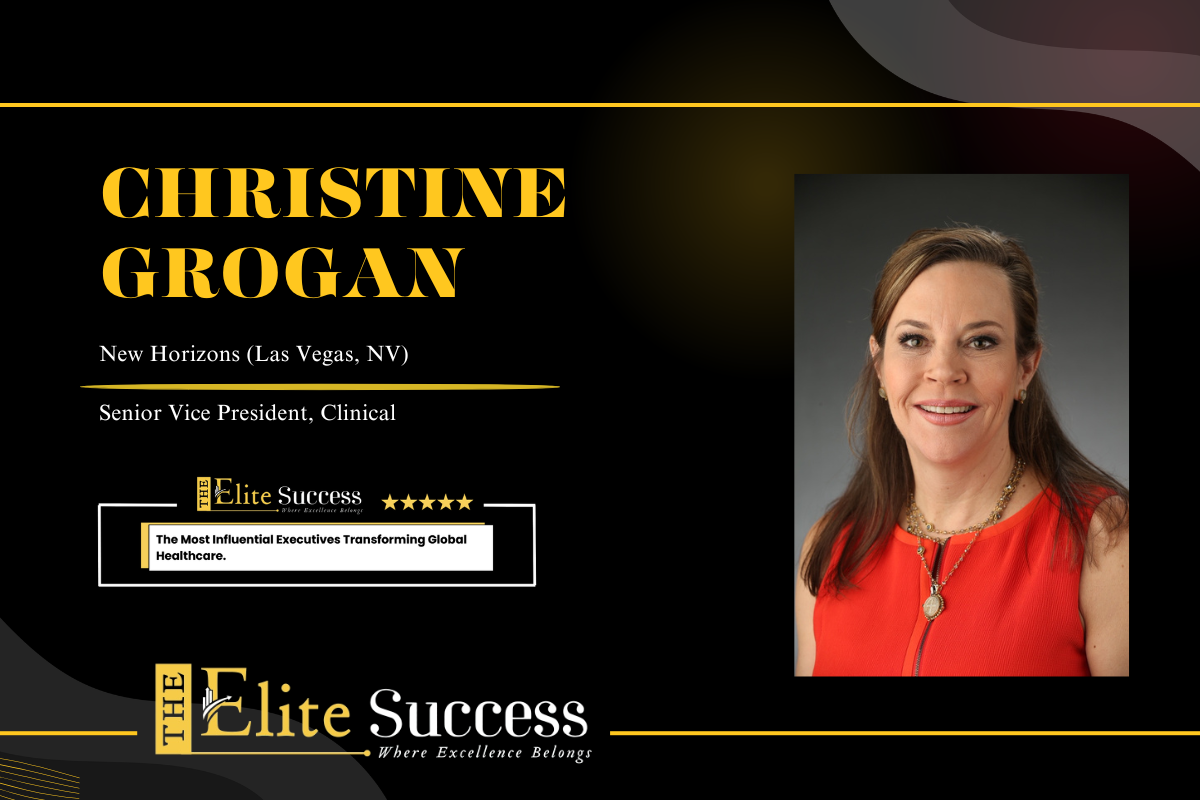
disciplined leadership. Christine Grogan, Senior Vice President, Clinical at New Horizons in
Las Vegas, focuses her work on driving that change.
Christine leads with urgency, clarity, and respect for patient dignity. She concentrates on
advanced wound care, biologics, and regenerative medicine, areas that address chronic
wounds, surgical complications, and delayed healing. Each year, millions of patients face
prolonged recovery, which increases discomfort and adds financial strain across the
healthcare system.
Christine does not approach this work as a simple market opportunity. She recognizes a
weakness in care delivery and takes deliberate action to correct it. At New Horizons, she
builds an integrated model that aligns clinical expertise, operational discipline, education,
reimbursement strategy, and advanced therapies into one coordinated framework. Her
objective remains direct. She aims to improve healing outcomes, reduce avoidable
complications, and elevate standards of care across diverse healthcare environments.
From Clinical Insight to Executive Impact
Christine built her career through direct exposure to many sides of healthcare. She worked in
clinical environments, handled regulatory processes, contributed to commercial strategy, and
led operational teams. These roles gave her a practical understanding of how care moves
from development to delivery. She saw how decisions made at the executive level shape what
happens in patient rooms each day.
Early in her journey, she began to notice a gap between clinical promise and day-to-day
execution. Innovative therapies existed, yet patients did not always receive them in a timely
way. Supply chains created delays, reimbursement processes slowed adoption, and providers
often lacked the support needed to integrate new treatments into routine practice. The issue
became especially clear in wound management and post-surgical recovery, where timing
plays a direct role in long-term results.
Her move into senior leadership came from a clear intention to address these barriers. She
chose not to remain within a single function and instead developed a broad working
knowledge across departments. She studied regulatory compliance and its effect on product
strategy. She examined payer systems and how they influence adoption decisions. She spent
time with frontline clinicians to understand the constraints they manage every day. This
cross-functional awareness allowed her to connect strategy with real-world application.
Advocacy became another defining element of her path. Christine founded and serves on the
board of a nonprofit organization that supports women facing challenges after breast cancer
reconstruction. The organization works to reduce disparities in access, with a focus on
underserved and minority communities. Through this work, she strengthened her belief that
innovation must remain accessible in order to have meaning.
Her career reflects deliberate alignment between values and action. She continues to focus on
building systems that deliver measurable impact for patients while maintaining practical and
ethical responsibility.
Redefining Advanced Wound Care Through Integrated Solutions
New Horizons operates in the advanced wound care and regenerative solutions market, one of
healthcare’s most underserved yet economically significant segments. The company was
founded on a clear conviction. Patients should experience faster healing, better clinical
outcomes, and access to advanced therapies that fit naturally within everyday clinical
practice.
The organization focuses on advanced biologics, regenerative medicine, surgical wound
management, and complex chronic wound care. Its portfolio includes negative pressure
wound therapy systems, amniotic skin substitutes, biologic implants, tissue-based products,
and regenerative technologies that support tissue repair and reduce the risk of complications.
Wound care delivery often lacks coordination. Providers manage multiple vendors, navigate
separate reimbursement pathways, and operate with limited clinical support. This fragmented
structure slows treatment decisions and increases administrative strain across healthcare
systems.
New Horizons responds with a vertically integrated operating model. The company combines
clinical education, logistics management, reimbursement coordination, and workflow support
within a single framework. This approach strengthens execution at the provider level and
improves continuity of care for patients.
The mission centers on advancing healthcare through next generation biologics and
regenerative medicine delivered through an integrated clinical and operational structure. New
Horizons aligns scientific innovation with disciplined implementation to elevate wound care
standards across diverse clinical settings.
Strengthening Clinical Infrastructure for Sustainable Impact
As Senior Vice President, Clinical, Christine directs the company’s clinical vision during a
period of national expansion. She guides infrastructure planning and monitors quality
standards across programs and markets. Her scope goes well beyond launching products. She
reviews each therapeutic offering against established clinical evidence, regulatory
expectations, and day-to-day practicality in hospitals and surgical centers.
Growth in healthcare brings pressure. Expansion can expose gaps in process, oversight, and
clinical consistency. Christine approaches scale with caution and structure. She sets clear
protocols, defines accountability, and strengthens internal systems before demand rises
further. Her priority remains steady performance and patient safety, even as operations widen
across regions.
She works closely with leaders in operations, reimbursement, and education. Together, they
connect training initiatives with coverage pathways and workflow design. This coordination
helps providers introduce advanced biologics into surgical and wound care environments
without unnecessary disruption.
Christine also maintains direct engagement with physicians, surgeons, and clinical
administrators. She listens to operational concerns and adapts strategy when needed. Her
approach keeps the focus on practical application rather than theory. Colleagues describe her
leadership as measured and consistent. She emphasizes preparation, transparency, and
disciplined follow-through as the foundation for long-term clinical credibility.
Strengthening Systems Under Rising Demand
Growth in healthcare rarely follows a straight path. Regulations shift, standards tighten, and
expectations rise at the same time. Expansion into new regions adds another layer of
scrutiny. Each move demands preparation, strong systems, and steady judgment. Christine
approached growth with caution because patient care could not suffer during expansion.
Rising demand soon tested the organization’s limits. Existing systems began to feel
stretched. Instead of moving faster, leadership focused on reinforcement. Careful hiring
became a priority, with close attention to experience and values. Internal processes received
detailed review. Technology upgrades moved forward only after proper evaluation. Vendor
relationships also went through scrutiny to ensure consistency and reliability. In healthcare,
even small missteps can affect outcomes, so discipline guided every step.
Long-standing habits in wound care created another barrier. Teams often worked in
isolation, with little coordination between surgery, recovery, and reimbursement. That
separation reduced efficiency and delayed progress. An integrated, technology-supported
model offered a different approach. Clear data and practical results helped providers
understand the benefits of alignment. Gradual adoption followed once value became visible.
Across the broader industry, burnout, rising costs, and limited access continue to strain the
system. These pressures reflect structural gaps rather than isolated mistakes. The strategy
centers on redesigning processes, simplifying care delivery, and reducing unnecessary
obstacles for both patients and clinicians.
Leading with Discipline, Integrity, and Long-Term Responsibility
Christine defines leadership as service grounded in accountability. She believes leaders must
bring clarity to complex healthcare systems and give teams a clear sense of direction. Her
priority involves removing barriers so clinicians can focus fully on patient outcomes and
deliver consistent care. She treats that responsibility as central to her role.
She does not view servant leadership as weakness or avoidance of difficult choices.
Healthcare environments demand firm decisions, especially when stakes remain high and
resources stay limited. She studies the data, weighs the impact, and then acts with
transparency and respect. Even when decisions create discomfort, she explains the reasoning
and stands by the outcome.
Trust anchors her philosophy and guides daily operations. She builds credibility through
steady performance, ethical conduct, and reliable follow-through. She understands that
reputation develops over time through disciplined execution and honest communication, not
through isolated achievements.
Christine also rejects the idea that compassion conflicts with profitability. She believes
values, when embedded into structure and strategy, strengthen performance. Organizations
that protect dignity, improve access, and pursue clinical excellence position themselves for
durable and responsible growth.
Open Dialogue as an Operational Advantage
Long-term success begins with people who believe in the mission, and Christine builds that
foundation by strengthening talent from within the organization. Continuous education,
structured leadership development, and defined career pathways give employees a clear sense
of direction and long-term opportunity. This internal focus supports stability, strengthens
accountability, and improves retention across teams.
A culture of open dialogue shapes daily operations. Team members share ideas, question
outdated systems, and contribute to problem solving without hesitation. Cross-functional
collaboration connects departments and keeps projects aligned with strategic goals, which
reduces silos and improves execution.
Operational performance depends on preparation and balance. Access to the right tools and
relevant training allows teams to meet expectations with confidence. Careful workload
planning prevents exhaustion and supports consistent results, while well-being remains part
of performance standards rather than a secondary concern.
Diversity, equity, and inclusion guide leadership decisions and talent development efforts.
Mentorship initiatives support women and minority professionals who pursue executive roles,
helping them expand networks and strengthen leadership capacity. Broader representation at
the executive level improves decision-making and increases the organization’s ability to
innovate with purpose.
Delivering Outcomes That Strengthened Trust
Christine led the clinical strategy at New Horizons during a period of strong growth. She
guided the expansion of several next-generation biologic platforms across multiple health
systems. Her team prepared carefully before each launch. They brought education teams,
reimbursement planning, and logistics together early in the process. That groundwork helped
each rollout move forward without confusion or last-minute changes.
As a result, health systems adopted the platforms quickly. Clinicians saw steady progress in
patient healing, and administrators reported better cost control. Christine focused on practical
coordination rather than speed alone. By aligning the right people and systems ahead of time,
she reduced delays and helped teams see results sooner.
The company expanded nationally under her leadership while meeting regulatory standards
and protecting clinical quality. She kept compliance and patient outcomes at the center of
every decision. Strong provider retention reflects the trust she built through consistency and
transparency.
Outside the corporate setting, Christine takes equal pride in her nonprofit work. Through this
effort, underserved women receive education and access to reconstructive support services.
She continues to address gaps in breast cancer reconstruction and believes healthcare
leadership should create impact beyond financial performance.
Scaling Regenerative Therapies with Clinical Discipline
Christine approaches the future with steady focus. She wants to make regenerative therapies
available to more patients, but she also wants the organization to run better each year.
Expansion, in her view, should not create confusion or strain. It should strengthen the
foundation. For that reason, she plans to bring imaging, predictive tools, and biologic
treatments closer together in everyday wound care. When these elements work in sync,
clinicians can make clearer decisions and patients benefit from more consistent care.
Research will remain at the center of progress. Christine values strong relationships with
experienced clinical leaders and relies on ongoing studies to keep treatment approaches
relevant and grounded in evidence.
As the company grows into new regions, she will reinforce compliance systems, staff
development, and technology support. Over time, her broader aim is simple: prove that well-
structured, clinically driven models can improve outcomes and operate with greater
efficiency in chronic care.
Defining Impact Through Patient Outcomes and Ethical Standards
Christine gives clear advice to emerging healthcare leaders. She asks them to master their
field and understand every detail of their work. She encourages them to state their value with
confidence and clarity. She also urges them to seek mentors with purpose and learn from their
experience. She reminds them that leadership paths do not move in a straight line. Challenges
will come. Setbacks will test resolve. Strong leaders stay resilient and adapt when situations
change.
Christine builds her leadership style on balance. She believes leaders must show compassion
while they maintain high standards. She applies discipline to strategy so the organization
stays stable and sustainable. At the same time, she keeps empathy at the center so the mission
never loses meaning.
Christine wants to build a legacy that people can measure and feel. She works to raise care
standards, widen access to innovation, and shape cultures built on integrity. She wants
patients to heal faster, avoid complications, and recover with dignity. That result, more than
titles or recognition, will define her impact.