Dr. Veronica Serrano: Leading at the Intersection of Care and Operations
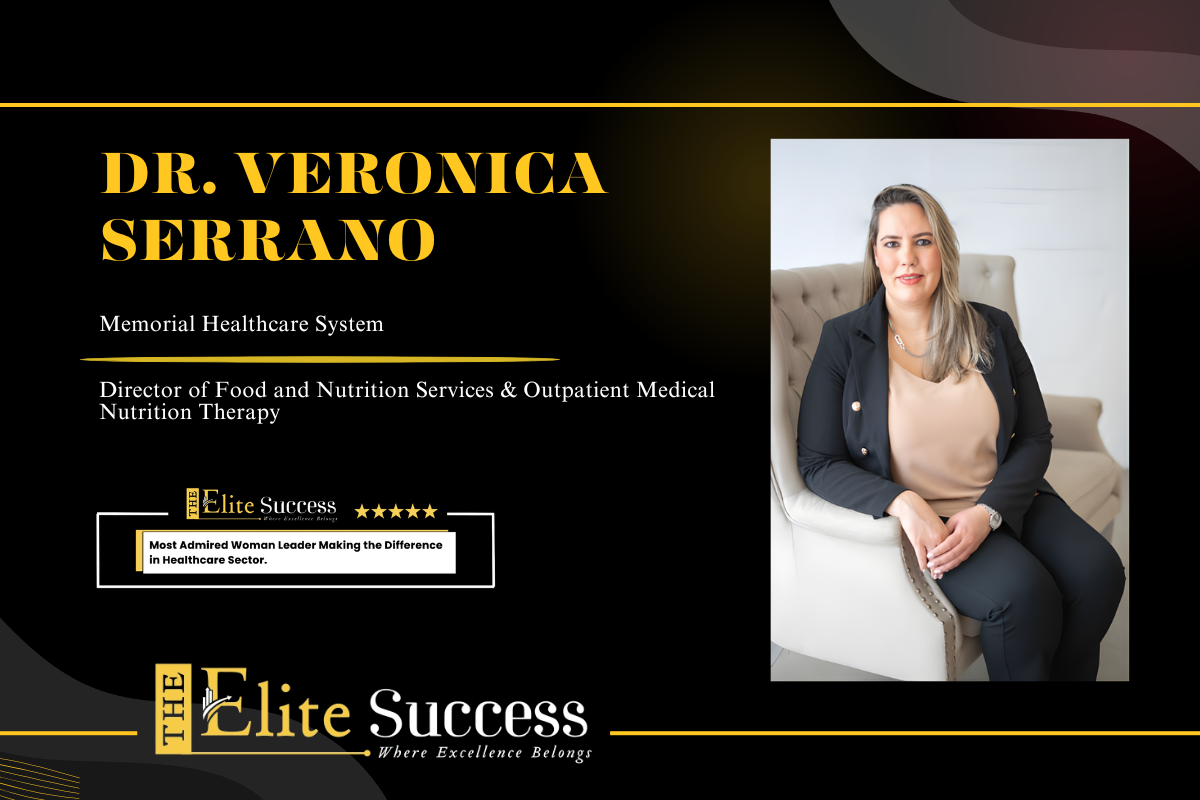
Continuity of care remains one of the most persistent and complex challenges in modern healthcare delivery. As Director of Food and Nutrition Services and Director of Outpatient Medical Nutrition Therapy at Memorial Hospital Pembroke, Dr. Veronica Serrano operates at the intersection of clinical care and operational performance. Memorial Healthcare System, comprising seven hospitals, a dedicated pediatric facility and a skilled nursing center, serves a diverse population with complex clinical and socioeconomic needs. Within this environment, effective nutrition services require strategic coordination, evidence-based practice and integration across care settings. Dr. Serrano’s leadership centers on embedding nutrition into the structural framework of care delivery, aligning clinical practice with continuity, accountability and measurable outcomes.
Dr. Serrano oversees both inpatient and outpatient nutrition services within a system recognized for high standards in patient safety and quality. At Memorial Hospital Pembroke, she maintains direct oversight of clinical dietitians and patient-facing support staff while guiding the operational design of nutrition services. This dual responsibility provides a comprehensive view of the patient continuum, from acute stabilization through sustained management.
Under her direction, nutrition is positioned not just as an ancillary support service but as a coordinated component of interdisciplinary care planning. Interventions are aligned with discharge processes and outpatient follow up pathways to reduce fragmentation and strengthen transitions. Her work emphasizes prevention, structured monitoring and sustained outcomes.
Her leadership approach reflects both clinical expertise and operational discipline. Decisions are grounded in patient outcomes while aligned with regulatory standards, workforce performance and long-term sustainability. In a healthcare environment that increasingly demands measurable value, nutrition services under her oversight contribute directly to quality metrics and organizational performance.
Bridging Clinical Practice and Executive Strategy
Dr. Serrano’s professional trajectory reflects deliberate progression grounded in clinical practice and operational responsibility. She began her career as a Registered Dietitian with a primary focus on direct patient care, managing complex clinical cases and addressing individualized nutritional needs within the acute care setting. Early in her practice, she recognized the measurable influence of evidence based nutrition interventions on length of stay, metabolic stability and readmission rates.
As her experience expanded, it became evident that acute care nutrition interventions often addressed immediate clinical needs without ensuring structured continuity beyond discharge. The absence of coordinated outpatient follow up limited long term sustainability and, at times, contributed to preventable readmissions.
Recognizing that improving outcomes would require more than refining clinical practice, she pursued a Doctorate in Healthcare Administration to better understand how systems are designed, financed and operationalized. Graduate training strengthened her ability to evaluate workforce allocation, reimbursement frameworks and regulatory standards while aligning them with patient centered care models. It also refined her capacity to translate frontline clinical insight into executive level strategy.
At Memorial Healthcare System, she assumed leadership roles that allowed her to apply this integrated perspective. Her focus shifted from isolated interventions to the design of care structures that extend beyond hospitalization. She concentrated on strengthening continuity, improving access and aligning nutrition services with long term population health objectives.
Although her scope of influence expanded, her clinical orientation remained foundational. Operational decisions continue to be evaluated through the lens of patient impact, ensuring that strategic initiatives remain anchored in measurable health outcomes.
Aligning Clinical Leadership with Organizational Standards
Operating within a high-performance healthcare environment requires alignment with established quality standards, regulatory discipline and measurable accountability. At Memorial Healthcare System, expectations for safety, compliance and interdisciplinary coordination are embedded within daily operations. Leaders are evaluated not only on clinical outcomes but on their ability to design sustainable systems that meet evolving regulatory and performance benchmarks.
Within this framework, Dr. Serrano’s leadership reflects structural alignment with organizational objectives. Initiatives under her direction are assessed not only for clinical effectiveness but for sustainability, reimbursement integrity and scalability across care settings. By embedding nutrition services within interdisciplinary workflows and discharge planning processes, she has reinforced value-based performance metrics while strengthening continuity of care.
Her approach extends beyond clinical oversight. Collaboration with revenue cycle management, information technology and supply chain partners has supported documentation accuracy, contract optimization and resource allocation strategies that align patient outcomes with operational efficiency. In doing so, she has positioned nutrition services as a contributing component of organizational performance rather than an isolated department function.
Leading Nutrition Services with a System Wide Perspective
Beyond structural alignment, Dr. Serrano’s leadership is defined by operational refinement and workforce development. Her responsibilities encompass clinical governance, scope of practice optimization and performance management across nutrition services. The emphasis extends beyond service delivery to strengthening professional authority, standardizing documentation and aligning interventions with measurable system outcomes.
Under her direction, dietitians have assumed expanded clinical responsibilities through structured order writing privileges and enhanced decision-making authority. These changes were implemented in coordination with medical staff leadership to ensure regulatory compliance and interdisciplinary alignment. By reinforcing professional scope while maintaining accountability, she has elevated both clinical confidence and operational efficiency within the department.
Performance oversight is equally disciplined. Timeliness of nutrition assessments, accuracy of documentation and follow up compliance are tracked against defined benchmarks. Clinical workflows have been refined in collaboration with information technology partners to improve efficiency while preserving evidence-based standards. These refinements support reimbursement integrity, quality reporting and measurable outcome tracking.
Workforce engagement remains central to sustainability. Continuing education, cross training and exposure to system level initiatives strengthen professional growth while reinforcing accountability. By integrating clinical authority with structured performance monitoring, nutrition services operate as a coordinated contributor to organizational metrics rather than a peripheral support function.
Building Continuity in a Fragmented System
Fragmentation in post discharge nutrition management represented one of the earliest structural gaps Dr. Serrano identified in her leadership role. While inpatient dietitians provided strong, evidence-based nutrition interventions and comprehensive patient education during hospitalization, continuity beyond discharge was inconsistent. Referral pathways lacked standardization, outpatient access was limited and coordination across care settings required formal structure. As a result, patients managing chronic disease and complex nutrition needs remained vulnerable to preventable deterioration and avoidable readmissions.
At the time, outpatient medical nutrition therapy services were not formally structured as a comprehensive program within the organization. An existing outpatient diabetes center provided targeted nutrition counseling for specific patient populations; however, there was no centralized framework to support broader clinical conditions, complex enteral regimens or coordinated post discharge follow up. Recognizing this gap, Dr. Serrano initiated the development of a structured outpatient model designed to extend medical nutrition therapy across diagnoses and care transitions rather than limiting services to condition specific education.
Implementation required cross departmental collaboration, defined referral pathways and the establishment of dedicated staffing models. Clinical workflows were standardized to ensure consistency in assessment, documentation and outcome tracking. Importantly, the initiative was designed not merely as an additional service line but as an integrated extension of inpatient care.
Concurrently, variability in malnutrition screening and diagnostic documentation was addressed through standardized assessment protocols and targeted clinician education. Strengthening diagnostic accuracy and documentation integrity clarified patient risk profiles, reinforced reimbursement alignment and created a reliable clinical foundation for coordinated follow up beyond discharge. By aligning clinical quality with financial accountability and reporting standards, these reforms supported the development of a structured outpatient model capable of sustaining continuity across care settings.
Through disciplined implementation and sustained oversight, the outpatient program evolved into a comprehensive nutrition center positioned to support patients across diagnoses and transitions of care. Its structured design and measurable framework not only strengthened continuity but also established the foundation for scalable growth and external validation within the healthcare system.
Building Trust Through Thoughtful and Ethical Leadership
Dr. Serrano’s leadership is defined by disciplined judgment and ethical alignment. Decisions are evaluated through three consistent priorities: patient impact, operational feasibility and long-term sustainability. This structured approach ensures that clinical integrity and organizational performance remain aligned rather than competing objectives.
Her leadership model reinforces clarity of expectations across clinical and operational functions. Transparency is embedded into workflow design, role delineation and performance accountability, strengthening trust across interdisciplinary teams. Compassion is not positioned as separate from performance but integrated within standards that guide daily execution.
Her doctorate in healthcare administration enhances her ability to align frontline realities with executive decision making. Workforce allocation, policy development and process design are evaluated not only for feasibility but for long term institutional impact. This perspective allows her to construct care models that are operationally sound, financially responsible and sustainable at scale.
Leadership under her direction extends across the full spectrum of the department, from frontline service teams to licensed professionals and supervisory leadership. Expectations are consistent, accountability is shared and professional growth is actively cultivated. This structure reinforces stability within teams and contributes to sustained patient experience outcomes across the organization.
Empowering Professionals to Grow and Lead
Dr. Serrano approaches workforce development as a strategic imperative rather than a managerial task. In an environment marked by national shortages within the dietetics profession, retention and professional mobility are treated as core operational priorities. Her leadership focuses on creating structured growth pathways that allow clinicians and frontline team members to expand their roles while remaining within the organization.
Scope of practice enhancements, including structured order writing privileges and expanded clinical authority, were implemented to align responsibility with professional expertise. These reforms strengthened confidence, reinforced accountability and elevated the clinical impact of the department. The development of outpatient roles further provided alternative career pathways, allowing experienced professionals to diversify their practice without exiting institutional care.
Continuing education and exposure to system level initiatives are integrated into performance expectations. Professional development is not symbolic; it is embedded within workforce planning to ensure alignment with evolving clinical standards and regulatory frameworks. This approach reinforces both competency and institutional continuity.
Leadership cultivation extends beyond licensed clinicians. From emerging dietitians to frontline operational staff, expectations are consistent and advancement is encouraged. Mentorship is intentional, preparing individuals not only to perform effectively in their current roles but to assume broader leadership responsibilities over time. Even within non clinical roles, emphasis is placed on professionalism, presence and respectful patient interaction, recognizing that patient experience is shaped at every point of contact.
By aligning professional growth with operational strategy, Dr. Serrano has cultivated teams equipped to sustain performance, adapt to change and assume expanded leadership responsibilities over time.
Transforming Outpatient Nutrition Care into a Scalable Clinical Program
One of the most significant initiatives under Dr. Serrano’s leadership has been the development and expansion of the Outpatient Medical Nutrition Therapy program. The program was created to address a persistent gap in care transitions. While patients often received appropriate nutrition interventions during hospitalization, structured follow up and long term management were frequently limited once they returned home.
To strengthen continuity of care, Dr. Serrano introduced a structured outpatient model designed to extend nutrition management beyond discharge and support patients across a broad range of clinical conditions. The clinic initially operated on a limited schedule, providing services two days per week while referral pathways and clinical workflows were established.
As provider awareness increased and patient demand grew, referrals expanded steadily as physicians, case managers and specialty clinics began incorporating the center into discharge planning pathways. Additional staffing was introduced, documentation protocols were refined and clinic operations extended to five days per week. The service evolved from a targeted intervention into a comprehensive outpatient center capable of managing chronic disease, metabolic disorders and complex enteral nutrition regimens.
Clinical outcomes were monitored as the program matured. Indicators such as glycemic control, weight stabilization, nutritional status and tolerance of enteral feeding regimens were tracked to evaluate the effectiveness of nutrition interventions over time. The program also strengthened discharge transitions by ensuring that patients received structured follow up rather than fragmented guidance after hospitalization.
In late 2025, the outpatient center received recognition through the American Diabetes Association Education Recognition Program. This national designation reflects adherence to rigorous clinical standards for diabetes education and medical nutrition therapy and validated the program’s structured framework.
Today the center supports a diverse patient population and continues to expand its reach. The program has strengthened interdisciplinary collaboration, improved continuity across care settings and generated interest from other hospitals seeking to replicate the model. What began as a focused effort to close a gap in care has evolved into a scalable clinical service that demonstrates the strategic value of nutrition within modern healthcare systems.
Extending Clinical Leadership Across the Healthcare System
Dr. Serrano’s work continues to expand beyond the development of individual programs. Her broader focus is strengthening the role of nutrition within population health strategies and integrated care delivery. By aligning outpatient nutrition services with chronic disease management and care transition pathways, she aims to ensure that nutrition interventions are embedded within everyday clinical practice rather than treated as isolated support services.
Her leadership trajectory increasingly reflects the intersection of clinical expertise and operational strategy. With a foundation in both dietetics and healthcare administration, Dr. Serrano brings a perspective that connects frontline patient care with system level performance. Her long term professional vision includes applying this dual expertise within executive leadership roles where clinical insight, operational discipline and strategic planning intersect to shape healthcare delivery at scale.
She also contributes to interdisciplinary initiatives and system committees focused on chronic disease management, care transitions and quality improvement, reinforcing the role of nutrition as an integrated component of patient care across the healthcare system.
Mentorship remains an essential part of her leadership approach. Dr. Serrano actively supports the development of emerging clinicians and future healthcare leaders by encouraging continued education, expanding professional responsibilities and fostering confidence in interdisciplinary environments. She is particularly committed to supporting women pursuing leadership roles in healthcare, demonstrating through her own career that clinical excellence and executive leadership can develop together.
Through this combination of program development, operational leadership and mentorship, Dr. Serrano continues to extend her influence across both patient care and healthcare leadership.
Principles of Purpose Driven Healthcare Leadership
Dr. Serrano often emphasizes that effective healthcare leadership requires balancing compassion with accountability. Patient centered care must remain the foundation of decision making, but sustainable outcomes also depend on operational discipline and measurable performance. In complex healthcare environments, leaders must ensure that systems are designed not only to treat illness but also to maintain dignity, trust and continuity for the patients they serve.
She also stresses the importance of lifelong learning for healthcare leaders. Understanding clinical realities, operational constraints and regulatory requirements allows leaders to make informed decisions that protect both patient safety and organizational integrity. In her view, compliance frameworks are not barriers to progress but essential safeguards that uphold quality standards across healthcare systems.
Finally, Dr. Serrano encourages leaders to think beyond the boundaries of their own departments. Healthcare operates as an interconnected system in which every operational decision influences patient experience, workforce stability and community outcomes. Leaders who combine accountability with empathy create environments where teams perform effectively and where lasting improvements in care delivery can take root.
A Lasting Measure of Leadership
For Dr. Serrano, the true measure of leadership extends beyond titles or individual accomplishments. It is reflected in systems that continue to function effectively, teams that remain empowered to lead and patients who benefit from stronger models of care long after a single initiative has been implemented.
Her vision places nutrition at the center of proactive healthcare delivery. Rather than viewing nutrition as a secondary service introduced after illness develops, she advocates for integrating medical nutrition therapy into prevention strategies, chronic disease management and long-term population health planning. This approach reflects her belief that nutrition interventions can protect health early and sustain recovery over time.
A central part of this vision is elevating the role of dietitians within healthcare systems. Dr. Serrano emphasizes that dietitians bring both clinical expertise and operational insight to patient care. By expanding scope of practice, strengthening interdisciplinary collaboration and supporting professional development, she continues to advocate for dietitians to be recognized as clinical leaders who contribute directly to patient outcomes and healthcare strategy.
Equally important is the legacy she builds through people. Dr. Serrano prioritizes developing teams grounded in integrity, shared purpose and professional growth. By mentoring emerging clinicians and encouraging leadership development, she works to ensure that the programs and systems she builds remain strong and sustainable well into the future.
Ultimately, Dr. Serrano defines leadership not by titles or recognition, but by the lasting impact of stronger systems, empowered teams and patients who experience more coordinated, thoughtful care.
How Dr. Serrano Positions Nutrition as a Strategic Advantage
1. Nutrition as Foundational Care
Nutrition is integrated as a clinical cornerstone of patient care rather than treated as a secondary support service.
2. Continuity Strengthens Outcomes
Care extends beyond discharge through structured follow up and coordinated outpatient management to support long term health and reduce preventable complications.
3. Clinical Expertise Paired with Operational Leadership
Frontline clinical insight is combined with system level strategy to design care models that are effective, scalable and sustainable.
4. Patient Centered Systems
Decisions are guided by a balanced consideration of patient impact, operational feasibility and long-term sustainability.
5. Dietitians as Clinical Leaders
Scope of practice, interdisciplinary collaboration and professional visibility are expanded to position dietitians as key contributors to healthcare outcomes.
6. Impact That Endures
Strong teams and well designed systems ensure that improvements continue long after individual initiatives are launched.
Note for Design Team: Feature this quote on the leadership highlight image page to emphasize the leader’s vision.
“Nutrition is not a secondary service in healthcare; it is a strategic component of patient outcomes, continuity of care and long-term population health.”
— Dr. Veronica Serrano